In the ancient times, trade was the primary economic activity which led to the establishment of urban settlements, where agricultural surplus was exchanged for manufactured or imported goods like iron, stone, wood, agricultural implements, textiles, spices, etc. Over time these small market-towns also became industrial centers where artisans and crafts persons produced a range of goods catering to the demands of the towns’ inhabitants, nearby villages as well as for exporting to other regions. Hence, trade and industries became the two main pillars of growth of market towns into larger complex urban centers with multiple functions. Merchants and industrialists have played an important role in the small towns’ development and administration for a long time.
Dhampur, located in the agriculturally rich Western Uttar Pradesh, is an apt example of small towns’ economy where trade and industry have played an equally important role in its earlier development. However, trade seems to be gaining more prominence in the recent decades. The Census of India data indicates that employment in trade in Dhampur increased from about 22 percent in 1961 to 32 per cent in 1991 while employment in both Household and Non-household industries declined from about 26 per cent to 20 per cent in the same years. These two sectors together continue to account for about half of the economic employment of the town. However, the nature of the trade has changed over time both in terms of the nature and quantum of commodities traded as well as the spatial distribution of the trading establishments.
In the late 1970s and early 1980s, the trading area of Dhampur lay along a narrow street in the congested center of the town, where wholesale and retail activities were tightly packed surrounded by densely populated old residential areas. Dhampur had already become one of the district’s main market centers. The Badi Mandi was the center of wholesale trade, with about fifty shops and agencies dealing with sugar export and food grain imports. The retail trade was conducted through around two hundred shops in the Kalan bazar, the town’s main market. Other shops and services were scattered all over the town. A street off the main bazar called Lohiyan was exclusively inhabited by ironware manufacturers and dealers. The bulk of Dhampur’s exports consisted of sugar, handloom cloth and milled rice, while major imports were mill-woven cloth, machinery, food grains, metals, minerals, cotton yarn, and consumer and luxury goods. Farmers did not have good storage facilities in the villages and most agricultural commodities were sold soon after harvesting. Grain traders and agents of rice mills went to the villages to buy grain at the time of harvest. Only a few large farmers took their surplus produce to the nearest grain mandis located at Dhampur or Nagina towns.
Badi Mandi. Photograph by Shubham Kashyap
Grain trading has also undergone significant shifts. Sugarcane has been the main crop in the region since the 1930s when the earliest sugar mills were established. Comparing recent years to the late 1970s, the price of sugarcane has increased significantly, which encourages farmers to cultivate more sugarcane. As a result, there is a huge decline in the food grain production. Farmers now grow small portions of food grains like wheat and paddy for their self-consumption. Only about 1 per cent of their output of these grains is sold directly in the Dhampur’s Badi Mandi. Consequently, grain traders are now purchasing branded packed grain and other food products like flour directly from factories in other parts of Uttar Pradesh and other states of India. Alongside this shift, technological changes have also taken place. There are now Japanese grain cleaning machines that remove small pieces of stones from the grain. Firms like Chote Lal Rajeev Kumar Jain, established in 1978, run a wholesale business of food grains. They purchase grains mostly from factories located in Delhi, Saharanpur, Bijnor and Gajraula. About 50 per cent of their buyers are from Dhampur town and 50 per cent from the tehsil.
At present, Dhampur’s trade has multiplied manifold making it a major trading center in the district. Serving around five hundred nearby villages and towns, Dhampur now deals with multiple trade activities from agricultural products to metal, fabric, electronic goods, and a number of consumer goods. There are around fifteen markets and approximately two thousand shops with mixed trade activities. The historic core of the town has become even denser and continues to be the main center of trade. However, there are examples of spatial dispersal of some of the trading activities towards the periphery of the town with wider roads where trucks can turn and unload easily. For example, the vegetable and fruit trade has shifted out from the Badi Mandi in the core town to the New Sabji Mandi on Nehtaur road in the west of the town. It is established on private land taken on lease from the farmers. It is spread over 6.25 acres and has 55 shops of similar size with wide streets that allow trucks to enter. The Nai Sabji Mandi and Fal Association manages the Mandi and also collects a monthly rent from the traders. A similar Sabji and FalMandi has come up adjacent to the Nai Mandi, which indicates a complete shift of the fruit and vegetable wholesale market from the core town. The traders purchase fresh fruits and vegetables from Rajasthan, Madhya Pradesh and Delhi and they sell their products to wholesalers who come from different parts of district Bijnor. The Badi Mandi continues dealing with grain trade specializing now in packed grains and other food products. The Lohiyan market is still inhabited by ironware manufacturers and dealers, where people especially from hilly areas come to buy metal-made products such as kadhai and tawa. The outer areas of the town have also seen the emergence of new kinds of trades such as dealing with branded clothing, footwear, televisions, cars, two-wheelers, tractors, medicines and other consumer goods.
Nai Sabji and Phal Mandi. Photograph by Pushpa Pathak
The major transformation in trade is visible in the import of automobiles and two wheelers. Multiple automobile showrooms have come up in Dhampur. For example, Shakumbari Automobiles, a Maruti Suzuki showroom opened in 2016, imports cars from different states of India including Haryana and Gujarat. Every year, in the lean season it sells about 20-25 cars, and in the peak season sales rise to 30-40. Around 60 per cent of the buyers are from Dhampur town and 40 per cent from Dhampur tehsil. Many cars are purchased by farmers for their daughters’ marriages, where gifting a vehicle has become a symbol of status. Only a small minority of 4-5 per cent buy cars without any social occasion. The showroom now faces competition from other automobile brands, which shows that Dhampur’s demand has risen and people prefer to have a choice.
The textile trade has also transformed remarkably over the past five decades. Now there are fewer shops selling cloth and many more shops have come up selling readymade garments for men, women and children. One such shop is Leela Shadi and Suits, established in 2015, which has transformed from a small-scale to a large-scale firm. About 80 per cent of their dresses are purchased from Surat and Ahmedabad, while the rest 20 per cent comes from Delhi. Around 80 per cent of the buyers are from Dhampur town, 10 per cent are from Dhampur tehsil, and the remaining 10 per cent come from other parts of the district such as Seohara, Nagina, Noorpur and nearby villages. Most of their customers come for the purchase of clothes for marriage purposes. After Covid, their regular customers declined due to shopping from online platforms.
The journey from the congested central street of 1979-80 to the multi-layered trade network of 2023-24 is a story not just of economic change but also of how a small town redefines what it means to live and do business in the present subaltern urban India. Dhampur continues to serve as a vital market center for its rural hinterland and other nearby small towns now plugged into a wider network of trade, industry, technology and developmental aspirations.
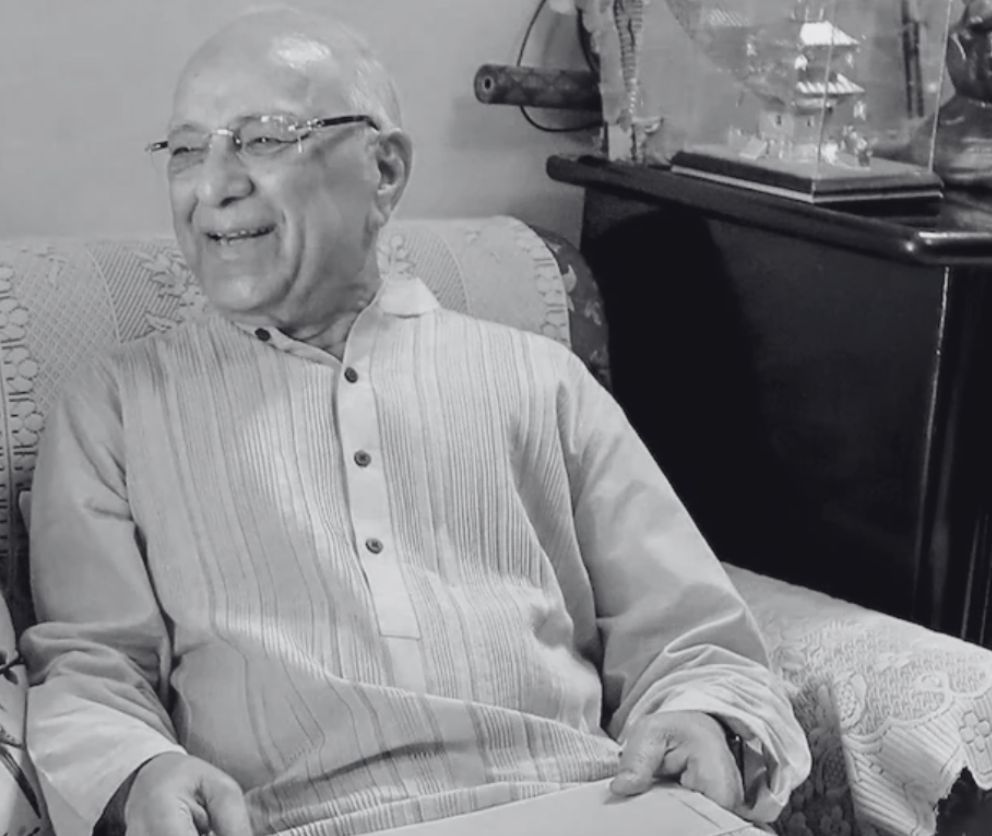
We condole the passing of Dr Subhash C. Kashyap, who served as the Honorary Research Professor at the Centre for Policy Research from 1990-2023.
One of India’s foremost constitutional scholars, Dr Kashyap played a pivotal role in shaping public understanding of the Constitution, parliamentary institutions, and democratic governance. Through his leadership, he helped establish and direct several institutions in this field such as the Academy of Grassroots Studies and Research of India (AGRASRI).
A distinguished administrator, Dr Kashyap served the Parliament of India from 1953 to 1990, retiring as Secretary-General of the Lok Sabha. Among his many contributions, he also served on the National Commission to Review the Working of the Constitution and Chairman of its Drafting and Editorial Committee, led the Inter-Parliamentary Union’s International Centre for Parliamentary Documentation in Geneva till 1983, and advised the Government of India on Panchayati Raj laws and institutions. A prolific author and respected public intellectual, he was awarded the Padma Bhushan, India’s third-highest civilian honour, in 2015.
As a member of the CPR community, Dr Kashyap enriched public discourse through his intellectual rigour and unwavering commitment to constitutional values. Many fondly remember his contributions to the faculty meetings, where his wisdom and deep engagement with questions of governance and institutional reform inspired colleagues, researchers, and policymakers alike.
The CPR community, its Governing Board, President, faculty, and staff pay tribute to the memory of a remarkable scholar and public intellectual whose work leaves an enduring legacy. We extend our sincere condolences to his family, friends, and loved ones and join them in this time of grief.
World Urban Forum 13, Baku, Azerbaijan, 21 May 2026
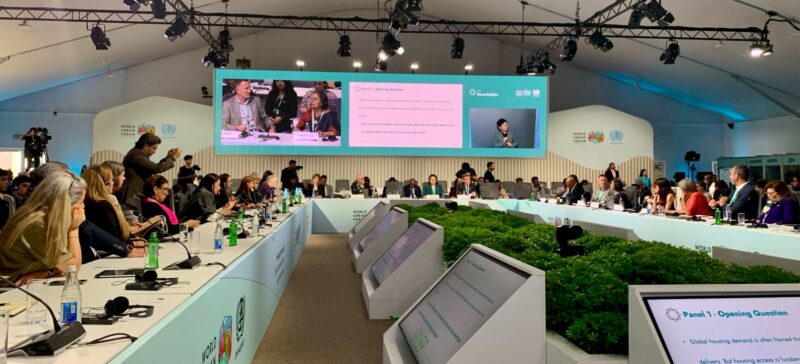
The UN-Habitat Academia and Research Roundtable at the 13th World Urban Forum (WUF13) brought together global experts to confront a stark reality: how the global housing crisis is not just a shortage of buildings, but a profound mismatch of data, capacity, and outdated educational models. The Roundtable was organised in two panels; Panel 1 on research and Panel 2 on academia. I was invited to participate in Panel 1 of the Roundtable as a representative from the Asia Region.
Conceptualised and coordinated by Ms Raphaelle Vignol, Programme Officer, Capacity Development Section, Global Knowledge and Advocacy Division, UN-Habitat, Nairobi, Kenya and moderated by Prof. Carlos Moreno, Sorbonne University, Paris, France, the discussion pivoted away from traditional metrics of “supply and demand” toward a more nuanced, “situated” understanding of how people actually live.
Dr Pushpa Pathak, Centre for Policy Research at the Academia and Research Roundtable at WUF13
Panel 1: A New Philosophy for Housing Research
In her opening remarks, Ms Ana Claudia Rossbach, Executive Director, UN-HABITAT, highlighted the challenge of a mismatch that exists between the global housing crisis and capacity. There are critical data and research gaps on housing and housing markets in the global South with some communities and geographies suffering much more than others and of course, the capacities are also uneven. While innovation is happening daily on the front lines in the Global South, this knowledge is often “locked” or uncaptured because traditional research is designed around available data rather than ground-level needs.
Referring to the UN-HABITAT Strategic Plan – 2026-29 that puts housing at the centre, along with land, basic services, informal settlements, requires means of implementations, including financial means, urban planning to multi-level governance, the local action, participation, data, access to data, access to knowledge. That’s why it is so important for us to maximise the potential that we have at WUF13, and specifically the WUF Academy, to make sure that we build a community which remains united towards a shared research and capacity development agenda. To this, Ms Ana argued that we must move toward co-production of knowledge where researchers work alongside practitioners and communities who do not have the luxury of time to stop and document their innovations.
Moving Beyond “Units” and “Deficits”
Dr Camila Cociña, Senior researcher (housing justice), International Institute of Environment and Development, presented an unconventional argument that the housing crisis cannot be solved by simply building more houses. and the real gap lies in improving existing housing stock and supporting the efforts people who are making house themselves. This requires researchers to move away from “supply/demand” deficit models and instead understand the “trade-offs” residents make between long-term investment and immediate tenure security.
The Paradox of the “Empty City”
Citing a peculiar phenomenon in the Sub-Saharan Africa, Dr Uchendu Eugene Chigbu, University of Science and Technology, Namibia, highlighted how the presence of high-end, “beautiful houses” in major cities like Lagos and Nairobi remain completely unoccupied while millions suffer from homelessness. He noted that a newly elected government in Ethiopia identified around 200 such unoccupied houses, underscoring the disconnect between housing supply and housing need. He argued that current research relies too heavily on formal market assumption, namely, that that people have titles and access to bank funding. This framework, arguably, fails to capture the data and address the reality of a mobile population of itinerant labourers who move frequently for work and often remain invisible to conventional planning and tracking systems.
Plurality and Changing Minds
Dr David Dodman, General DirectorInstitute for Housing Studies, Netherlands, argued that the “highest goal” of research is not just data generation, but changing minds and actions. He advocated for a plurality of approaches, recognising that no single method —whether it’s mortgages, self-builds, or large-scale public housing — can solve the crisis alone. Highlighting the value of long-term evidence, he pointed to the “longitudinal work” of Caroline Moser as a gold standard for housing research. By tracing how settlements and communities evolve over decades, such research offers perspectives often lost in short-term policy cycles.
The “Invisible” Rental Market
As part of the distinguished panel, I, Dr Pushpa Pathak, Centre for Policy Research, New Delhi, India, drew attention to the massive research gap in the low-income rental housing market. Most housing data focuses on ownership, rental housing remains understudied, at all levels, and especially in informal settlements. This is important because the quality and affordability of rental housing determine the decision to move with family or alone that affects the pace of urbanization, the commitment of people to cities and the nature of rental housing demand. Emphasis should be on understanding the private response to rental housing for lower income groups: who makes it, how is it financed, who does it cater to, and is there discrimination? What are the identity markers of discrimination? Language, religion, region, gender, or family versus single rentals? These questions require deeper empirical investigation to understand rental housing market for lower income groups in Asia’s expanding urban areas.
Big Data vs. Small Data
Dr Karen Chapple, Director of the School of Cities, University of Toronto, Canada, warned of a dangerous trend: while “Big Data” and AI are flourishing, the census and “small data” (household-level surveys) are disappearing or becoming irregular. She shared an unconventional finding from her work at the Urban Displacement Project – on how most people actually experience “emplacement” rather than displacement, implying they try to stay as close to home as possible even under pressure. Without “small data” to understand motivations and choices, Big Data risks making lower-income and racialized populations even more invisible.
The Scale of the Neighbourhood and the City
Dr Margarita Greene, Professor, School of Architecture, Pontifical Catholic University of Chile, argued that research has focused too much on “the house” and not enough on the neighbourhood scale. She suggested that “situated research” is needed to understand how different cultures approach social cohesion. A major failure of modern urbanism, according to Greene, is the inability to “combine properly” different social groups; we need to understand how the poor and the rich can coexist in a way that enriches both rather than leads to segregation.
“Situated” Approach for Reconstruction and Development
Dr Fariz Ismayilzada, Member of Parliament and Vice Director, Azerbaijan Diplomatic Academy (ADA) and Information Technologies University, Baku, Azerbaijan, provided a concrete example of this “situated” approach through the reconstruction of the Karabakh region. He described using university surveys to ensure that the creation of new villages from scratch matched the economic skills and family structures of the 80,000 displaced people returning to their lands.
Panel 2: Higher Professional Education to Fill the Capacity Gaps and Foster Innovation
The second half of the roundtable focused on reforming education to teach the next generation of urban professionals for a world that is changing rapidly.
Housing as Land Policy
Dr Enrique R. Silva, Chief program officer, Lincoln Institute of Land Policy, Cambridge, USA, emphasised that the most urgent gap in education is the failure to link housing policy to land policy. Housing is too often treated as a construction or finance issue when it is fundamentally a land problem. Unconventionally, Silva suggested how land policy literacy at the primary or high school level, can help build a “talent pipeline” of citizens who are aware of their communities and understand how they function.
Universities without Walls
Dr Gul Sola Mamedova, Rector of the Azerbaijan Nature and Construction University, BAKU, Azerbaijan advocated for universities to go “beyond their own walls” and become “city laboratories”. Mamedova emphasised lifelong learning, noting that because cities change so fast, a bachelor’s degree is no longer sufficient; professionals need “agile” programs to upgrade their knowledge on issues like climate change and digitalisation every few years.
The Systems Integrator
Dr.Edgar Pieterse, Founding Director of the African Centre for Cities, University of Cape Town, South Africa, South Africa, emphasised that given the multidimensional nature of sustainable urbanism, housing and the land question, we have to adopt a systems perspective. What is needed are “Systems Integrators” who may start as architects or engineers but are trained to “curate” the process of learning, failing and testing repeatedly within a highly politicised, under-resourced environments. Pieterse argued that these professionals need more than just technical skills; they need “adaptive leadership,” “spiritual attentiveness” (or “Zen”) and new competencies like AI to navigate the emotional and ethical trade-offs of urban governance.
The Missing Skill: Urban Finance
Ms Lucy Slack, Commonwealth Local Government Forum, London, UK, pointed out that while we talk about planning, urban finance is rarely treated as its own specialised profession or skill set. She noted that high-level skills often reside in the private sector rather than the municipalities that need them. She called for a “professionalisation of local governments” to make cities places where high-level experts actually want to work.
Professionals as Trans-discipline Bridges
Ms Alexa Martinez Soto, Monterrey Institute of Technology and Higher Education, Mexico, framed housing as a “socio-technical complex system”. She argued that the new generation of professionals must act as “bridges” who can speak the languages of economists, architects, and community members simultaneously. She highlighted the need for “caring cities,” a concept often ignored in technical planning, which focuses on the needs of women and caregivers. Interestingly, she suggested that AI could be a tool for radical inclusion, helping city governments process the “complexity of multiple perspectives” from citizen voice notes and texts that are currently ignored.
City and Housing as Interdisciplinary Conversations
Ms Karla Planter Perez, Rector General of the Universidad of Guadalajara, Mexico, delivered a provocative critique, stating that universities are currently providing “professional training for a world that doesn’t exist anymore”. She argued that because reality is not “segmented,” education must move toward systemic and critical thinking that allows professionals to read “what does not appear on indicators,” such as daily experiences of exclusion. The interdisciplinary vision needs to go beyond infrastructure, finance, and urban planning, and think of the questions around the city and housing as interdisciplinary conversations.
Key Themes Emerging from the Discussions
Several discussions challenged conventional approaches to housing and urban planning, highlighting the need to rethink how cities respond to rapid urbanisation, inequality, and social change.
Focus on Improvement, Not Just Construction Scholars and experts argued that addressing the housing crisis requires more than increasing housing supply. Equal attention must be paid to improving existing stock and supporting ground-level efforts than by just building new supply.
The Mobile Urban Population Problem A recurring theme was the growing disconnect between planning frameworks and lived realities. Planners continue to design for static populations while African urban residents are increasingly mobile and “itinerant,” and require entirely new tracking and planning models. Understanding and responding to this mobility remains a significant challenge for housing policy and urban governance.
The “Luxury Vacancy” Paradox Speakers highlighted the contradiction of rising homelessness existing alongside increasing vacant luxury housing. This phenomenon raises important questions about how housing markets function and whom they ultimately serve, a gap that traditional market research has failed to address.
Emplacement over Displacement Discussions also challenged assumptions about mobility and relocation. Contrary to common belief, data shows people have a powerful “emplacement” drive, often staying in high-risk or inadequate housing just to remain near their community owing to strong social, economic, and cultural ties Housing solutions, therefore, must account for people’s attachment to place rather than focusing solely on physical relocation.
The Death of the Specialist
As urban challenges become increasingly interconnected, participants stressed the need for professionals who can work across disciplines. The “hyper-specialised” professional (just an architect or just an economist) is becoming obsolete, replaced by “Systems Integrators” who are capable of understanding “interdependencies” of the city.
Spiritual Leadership in Planning Several speakers reflected on the qualities needed to lead cities through sensitive transitions. Effective urban leadership requires “emotional confidence” and “spiritual attentiveness” to survive the “political fights” of municipal governance.
AI as a Listener The potential of artificial intelligence was discussed not only as a tool for data analysis but also as a means of engaging with citizen voices at scale. Participants explored how rather than just using AI for data analytics, it can be used to “hear” and process thousands of diverse citizen voices that traditional governments find too “complex” to manage.
In Conclusion: Research and Education for Change
The roundtable concluded with a call for international collaboration to break out of “insular conversations”. As Ms. Raphaelle Vignol summarised, together with you we are going to drive the housing research and capacity development agenda in the next three years. The goal is to move toward research and education that is designed for change, putting the human experience and the “neighbourhood scale” back at the heart of the global housing agenda.
My own personal takeaway is largely similar to Ms. Vignol’s. The thrust of the research panel was to re-scale away from individual housing to neighbourhood level issues and its interaction with housing choices, a greater focus on private responses, especially at lower income groups, which would include rentals and incremental interventions. Similarly, on the educational front, the emphasis was on an approach that equipped students with a more integrated and cross-disciplinary toolkit that could relate to community experiences, rather than specific disciplinary inquiries.
On 10th January 2024, CPR received a notice from the Ministry of Home Affairs cancelling its FCRA status. The basis of this decision is incomprehensible and disproportionate, and some of the reasons given challenge the very basis of the functioning of a research institution. This includes the publication on our website of policy reports emanating from our research being equated with current affairs programming.
During the tenure of our suspension, we sought and obtained interim redress from the honourable Delhi High Court and will continue to seek recourse in all avenues possible.
This cancellation comes after a decision to suspend the FCRA status in February 2023. These actions followed an Income Tax “survey” that took place in September 2022. The actions have had a debilitating impact on the institution’s ability to function by choking all sources of funding. This has undermined the institution’s ability to pursue its well established objective of producing high quality, globally recognised research on policy matters, which it has been recognised for over its 50 years’ existence. During this time the institution has been home to some of the country’s most distinguished academics, diplomats and policymakers.
CPR firmly reiterates that it is in complete compliance with the law, and has been cooperating fully and exhaustively at every step of the process. We remain steadfast in our belief that this matter will be resolved in line with constitutional values and guarantees.