- Home
- About Us
- Research
- Research Areas
- Agriculture
- Air Pollution
- Climate Change
- Economy
- Education
- Environmental Law & Justice
- Energy & Electricity
- Federalism
- Governance, Accountability & Public Finance
- Health & Nutrition
- Indian Politics
- International Relations & Security
- Jobs
- Land Rights
- Sanitation
- Social Justice
- State Capacity
- Technology
- Urbanisation
- Water
- Miscellaneous
- Research Initiatives
- Research Areas
- Publications
- People
- Events
Highlight>

Disparities in access to toilets in urban India
June 23, 2017
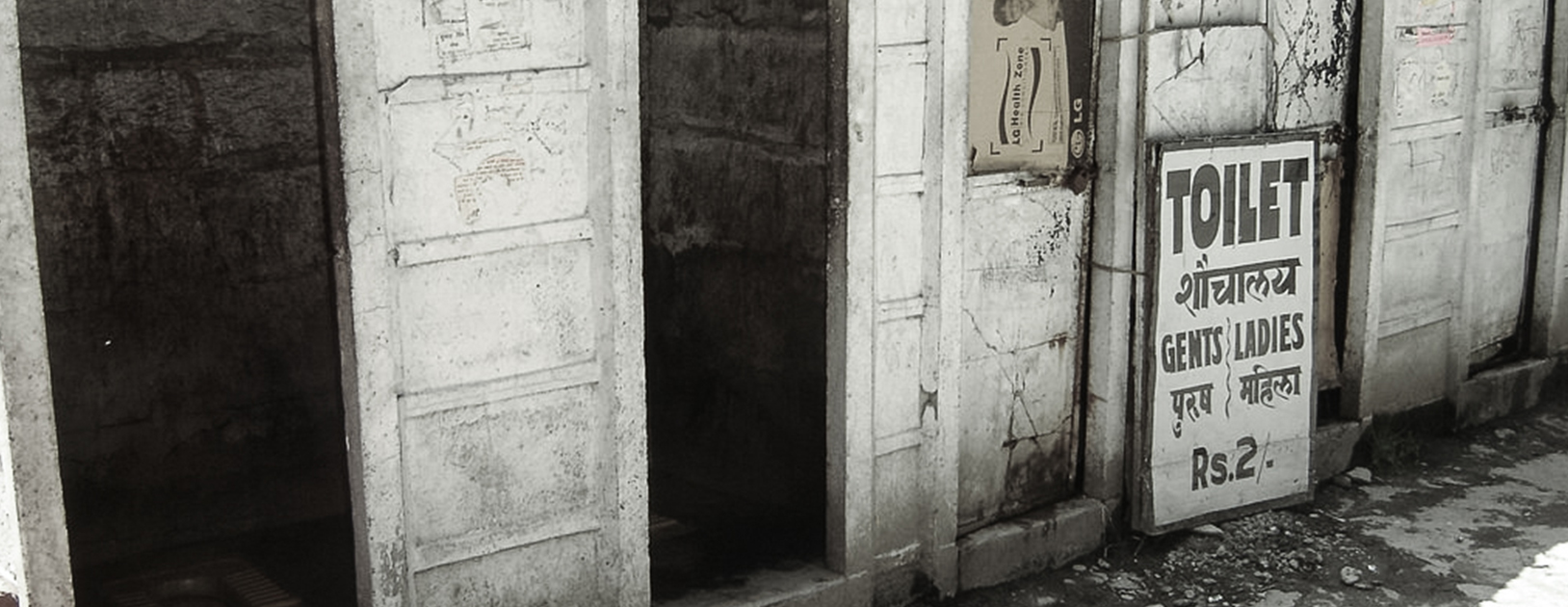
ADITYA BHOL EXPLAINS THE INEQUALITIES BASED ON NATIONAL SAMPLE SURVEY’S DATA
SANITATION URBAN SERVICES
What is the research about?
In a new working paper, Aditya Bhol presents the levels of disparities in access to toilets based on varying socio-economic characteristics of households in urban India.
This analysis is based on data from the sixty-ninth round of the National Sample Survey (NSS) of India on ‘Drinking Water, Sanitation, Hygiene and Housing Condition in India (July 2012 – December 2014)’, conducted by the Ministry of Statistics and Programme Implementation.
State-wise disparities in access to urban sanitation have been analysed drawing on data based on inequalities with respect to the following factors:
Economic conditions – Monthly Per Capita Expenditure (MPCE – taken as a proxy for income)
Access to public infrastructure – drainage and drinking water supply
Social conditions – caste status of households (social groups)
Spatial conditions – slum and non-slum status of households
Behavioural conditions – adequacy of water supply and perceived housing condition of sampled households
What are the key findings?
The findings of the paper corroborate the existence of disparities in access to toilets across 15 states (selected on the basis of population) and the factors that drive the inequalities vary in the different states. For example:
Economic well-being gauged in terms of monthly per capita expenditure is observed to be a crucial determinant of access to toilet. Except Kerala and West Bengal, disparities in access to toilets are high based on MPCE of households in almost all the states.
Rajasthan, Bihar, Odisha, Jharkhand, Uttar Pradesh and Tamil Nadu show disparities in access to toilets based on differential access to drainage.
Caste based inequalities are seen to exacerbate disparities in access to toilets in the states of Rajasthan, Bihar, Jharkhand, Uttar Pradesh and Tamil Nadu.
Highly urbanised states of Maharashtra, Gujarat and Tamil Nadu exhibit acute spatial inequalities in access to toilets when slum and non-slum households are compared.
How was the research conducted?’
The findings mentioned above are the result of a regression analysis and hence represent the combined effect of different predictors. With MPCE taken as the base for comparison of the disparities, the relative effects of other factors – drainage or caste system or both combined have been measured. For instance, the disparities in access to toilets, which are based on either differential access to drainage or differential caste status of households or both taken together are seen to be acute at low levels of MPCE and become less severe with increasing MPCE.
Conclusion
The bashful acknowledgement of the poor sanitation figures in India has been substituted with a fervour to attain Clean India by 2019, engendered by the recent Swachh Bharat Mission (SBM/ Clean India Mission), Atal Mission for Rejuvenation and Urban Transformation (AMRUT) and Smart Cities Mission. These policies and the policy makers stand to benefit from the acknowledgement of the inequalities inherent in India which have continued to impede the overall development of sanitation infrastructure in India. The findings of this research paper have far-reaching policy implications in this regard and urge the policy makers and stakeholders to address these inequalities while delivering the ascertained infrastructure towards the achievement of our collective goal – Swachh Bharat.
The full working paper can be accessed here.
A presentation on this research, made at the Population Association of America Conference in Chicago on 28 April 2017, can be accessed here.
This research is part of the Scaling City Institutions For India: Sanitation project at the Centre for Policy Research.