- Home
- About Us
- Research
- Research Areas
- Agriculture
- Air Pollution
- Climate Change
- Economy
- Education
- Environmental Law & Justice
- Energy & Electricity
- Federalism
- Governance, Accountability & Public Finance
- Health & Nutrition
- Indian Politics
- International Relations & Security
- Jobs
- Land Rights
- Sanitation
- Social Justice
- State Capacity
- Technology
- Urbanisation
- Water
- Miscellaneous
- Research Initiatives
- Research Areas
- Publications
- People
- Events
Highlight>

From the Archives | 1st Edition
February 26, 2025

For over half a century, the Centre for Policy Research has been at the heart of some of the most significant policy discussions in India.
From the Archives is an attempt to reconstruct CPR’s history from its archival records and chart its journey. The series will revisit CPR’s research initiatives, publications, and interactions with national and global policymakers, which have helped it mount the challenge of inclusive, actionable change.
How We Started
Dr. Vishwanath A Pai Panandikar established CPR in the year 1973 in a commercial building in Vasant Vihar. Having worked at various ministries of the Indian government, Dr. Panadikar observed anticipatory shortfalls in the country’s policy-making mechanisms. He founded the institution with a vision to foster better policy planning and remedy this gap. From its outset, the Centre has been a space for holding seminars and conferences, conducting research, and promoting education aimed at maximising national resources and channeling a more robust public discourse.
Research Areas 1980-84
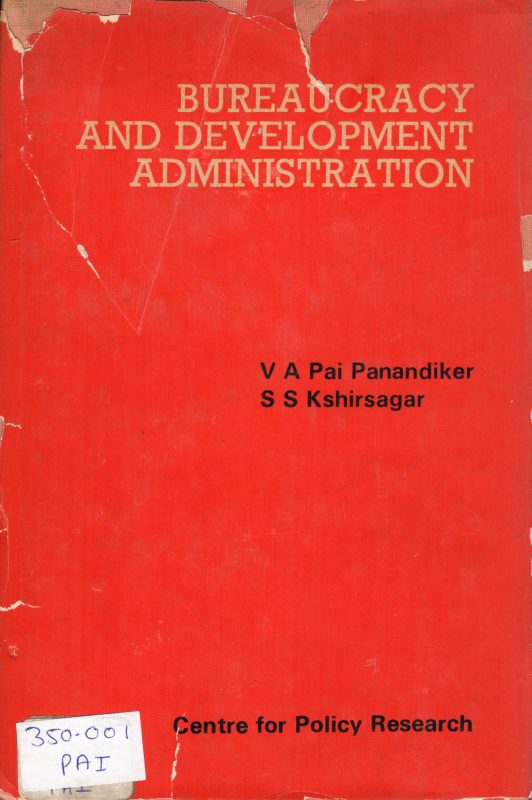
During the early 1980s, the Centre responded to several key issues of topical relevance. It worked extensively on formulating strategies for social and economic development. For this, the Centre undertook collaborative projects to outline the role of bureaucracy and understand citizen participation in India’s growth story. The projects sought to draft ways of closing the gap between administrators and common citizens to drive synergic development.

Through its external associations, CPR also facilitated research and dialogues on nation-building, national security, regionalism in Asia, non-alignment in a bipolar world, nuclear weapons, and India’s cooperation with its neighbours. The Centre collaborated with the UN and its agencies, SAARC, and other foreign and local organisations to rise to the occasion.
The Centre also engaged with rural industrialisation and started an action-research project in the Alwar district to enhance the industrial capacity of rural areas and develop policy actions for integrated rural development. The public policy discourse of the 1970s and ’80s India was gripped with visible anxiety about the rising population. The Centre also made academic contributions on this subject through numerous research outputs and developed blueprints for people-centric, integrated family planning programmes.
This is the first edition in this series. Stay tuned for more!