- Home
- About Us
- Research
- Research Areas
- Agriculture
- Air Pollution
- Climate Change
- Economy
- Education
- Environmental Law & Justice
- Energy & Electricity
- Federalism
- Governance, Accountability & Public Finance
- Health & Nutrition
- Indian Politics
- International Relations & Security
- Jobs
- Land Rights
- Sanitation
- Social Justice
- State Capacity
- Technology
- Urbanisation
- Water
- Miscellaneous
- Research Initiatives
- Research Areas
- Publications
- People
- Events
Highlight>

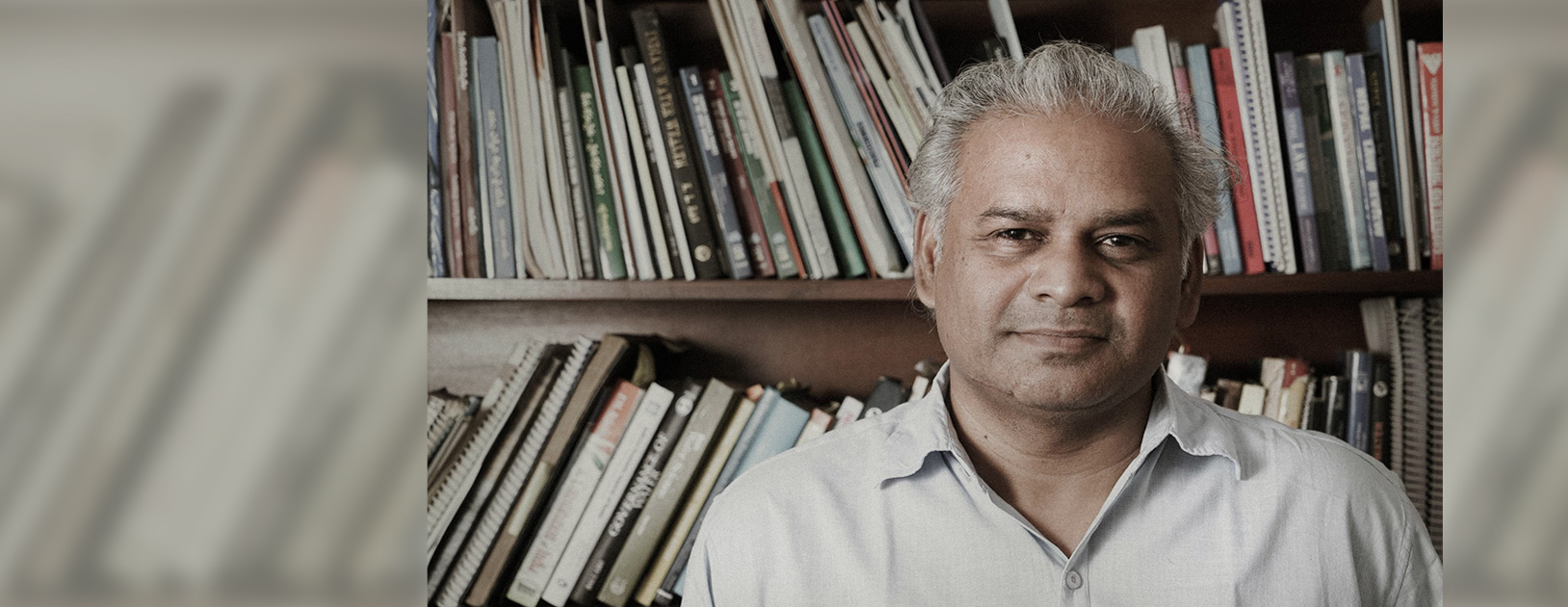
Dr Srinivas Chokkakula appointed as the MoWR Professorial Research Chair, Water Conflicts and Governance
October 26, 2018
READ THE FULL ANNOUNCEMENT
WATER RESEARCH
Centre for Policy Research (CPR) and the Ministry of Water Resources, River Development & Ganga Rejuvenation (MoWR) have signed an agreement establishing a ‘MoWR Research Chair – Water Conflicts and Governance’ at CPR, with a mandate to pursue independent and evidence-based research to inform policy making, and enabling institutional transformation towards addressing the evolving challenges in India’s water sector.
Dr Srinivas Chokkakula has been appointed as the MoWR Research Chair – Water Conflicts and Governance. Dr Chokkakula is a Fellow at CPR, and has an interdisciplinary training in political geography, planning and engineering.
The Research Chair will pursue a broader research agenda in transboundary water conflicts/cooperation, initially focusing on interstate river water cooperation and disputes resolution targeting policy-relevant research outputs. The Research Chair will also help foster an enduring CPR-CWC (Central Water Commission) collaborative research relationship, beginning with a forum for dialogue on contemporary water sector issues and challenges. The forum will make particular efforts to bring in key stakeholders’ perspectives – of the States and civic society actors – towards better Centre-States and state-society engagement in policy making. The Research Chair is also expected to extend advisory inputs as required by the MoWR and its agencies such as the CWC.
Dr Srinivas Chokkakula’s research and policy interests are primarily in water policy and institutions, focusing on transboundary water conflict/cooperation and governance. His research interests also extend to the broader area of politics of infrastructure development, including inland waterways, smart cities, and rural roads. He currently leads multiple research projects clustered under a TREADs (Transboundary Rivers, Ecologies, and Development studies) programme engaging primarily with interstate (federal) river water governance in India. Chokkakula has written and published widely on the topics, both in academic journals and mainstream outlets, including a recent monograph, ‘Why do interstate water disputes emerge and recur? An anatomy of ambiguities, antagonisms and asymmetries’. His complete bio can be accessed, here.