Key facts about Karnataka election results explained in numbers and charts
DATA ANALYSIS BY NEELANJAN SIRCAR (SENIOR FELLOW, CPR), ROSHAN KISHORE (HINDUSTAN TIMES) & HOW INDIA LIVES
ELECTION STUDIES
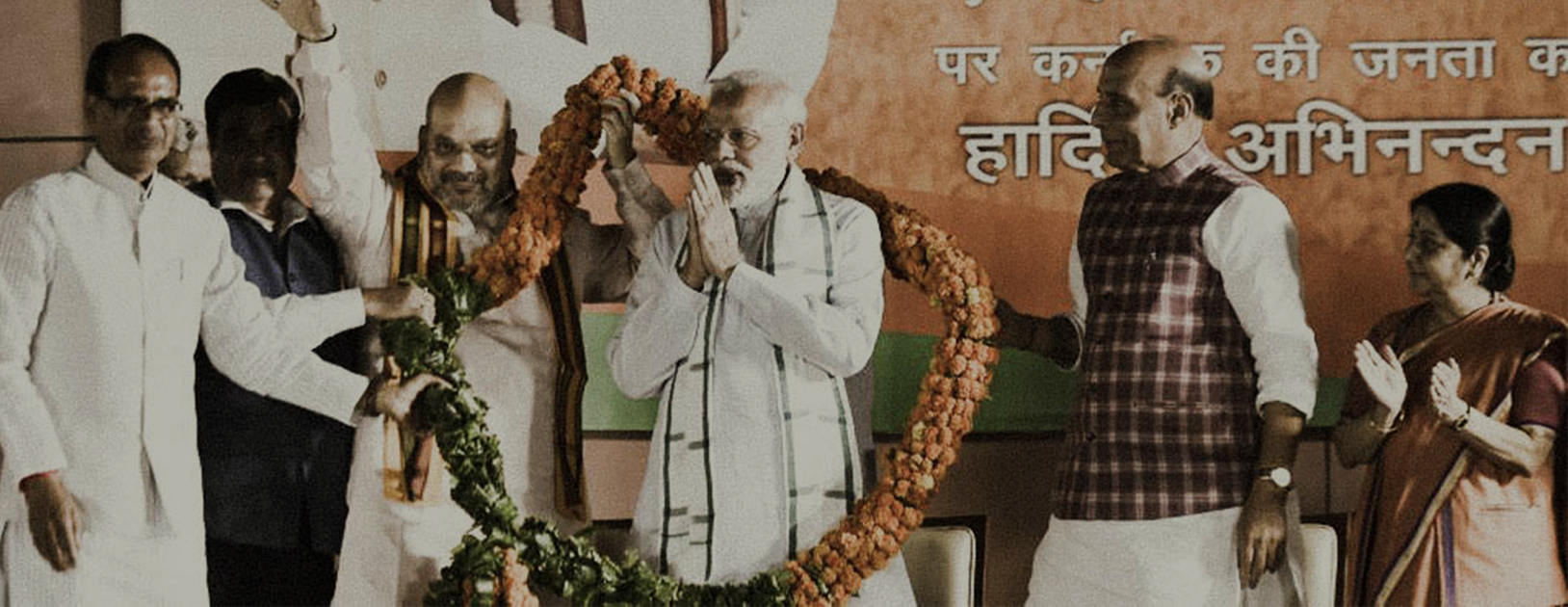
A last-minute blitz by Prime Minister Narendra Modi helped the Bharatiya Janata Party (BJP) surge ahead of the ruling Congress in Karnataka assembly elections, but it fell just short of the magic figure.
A mapping of election results on top of data that characterises the socio-economic make up of constituencies throws up interesting details on how certain sections of voters clinched it for the winners. Here are three voting patterns seen in Karnataka.
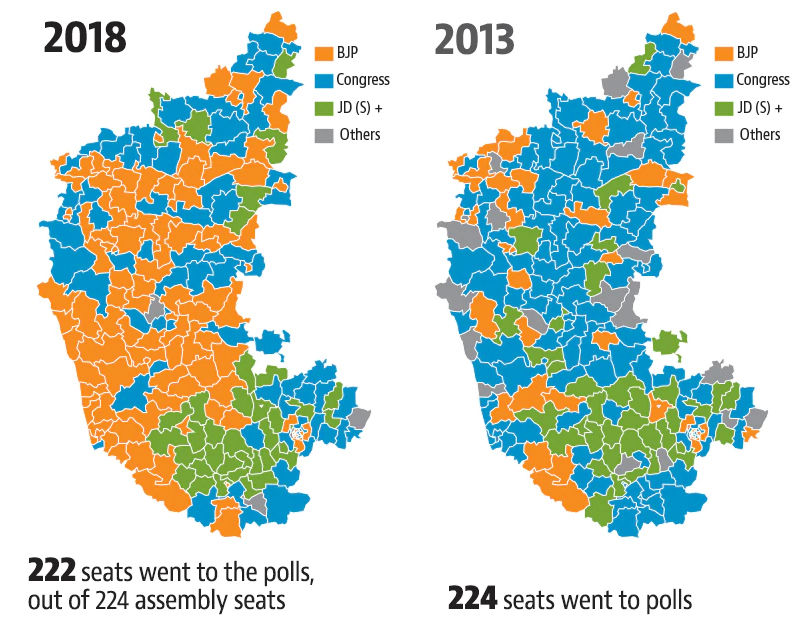
Urban seats 35/71
There are 71 constituencies where more than 35% of the population was living in urban areas. The BJP won 15 such seats in 2013. In 2018, it increased its count to 35. Meanwhile, the Congress saw its tally in such seatsshrink from 42 to 30 seats.
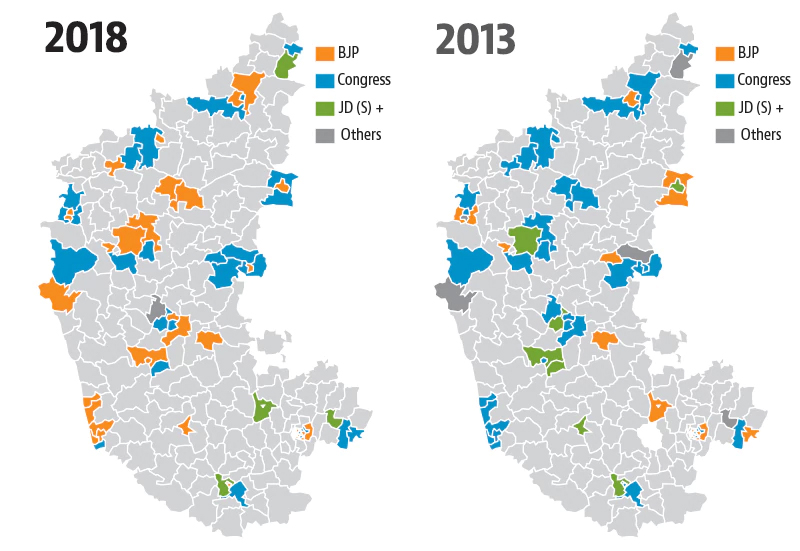
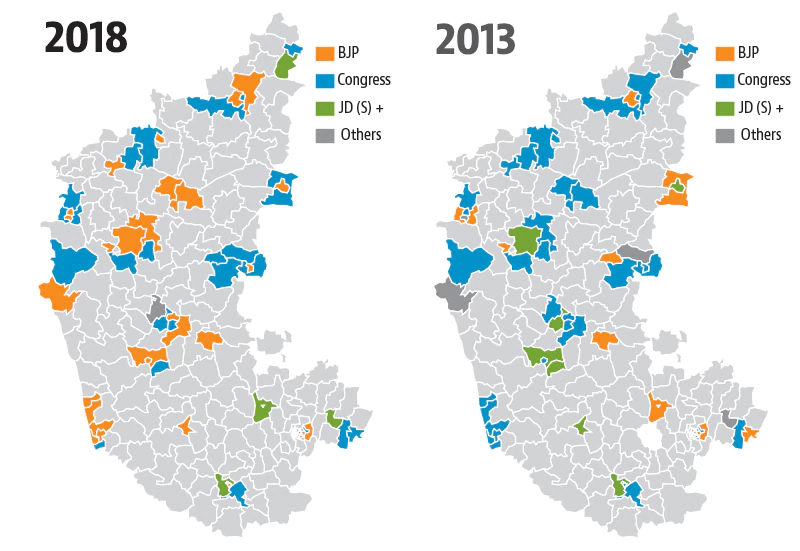
Dalit seats: 31/82
There are 82 constituencies where Dalits comprised over 20% of the population. In 2013, the BJP won only 9 of these seats. This time, they won 31, mostly at the expense of the Congress, whose tally fell from 49 to 34.The JD (S) saw its count in such seats fall from 17 to 15.
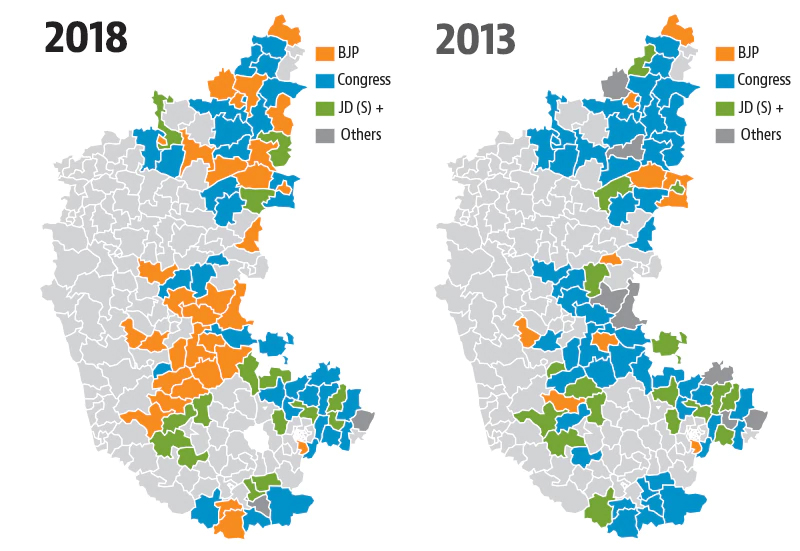
Minority seats: 36/78
There are 78 constituencies in Karnataka where the share of minorities in the population was above 17%. The BJP increased its haul in such seats from 19 to 36. The Congress went from 45 to 35—a decline but not of the same level as in Dalit and urban seats.
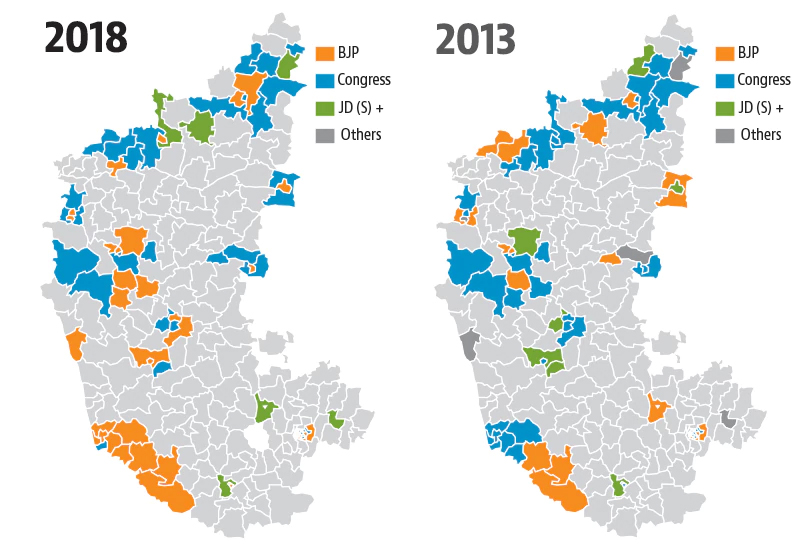
Irrespective of who forms the government, the results are a boost for the BJP as it has managed to get more seats than the Congress and bury the ghosts of the defeat it suffered in the 2013 assembly elections. Three factors can explain this success.
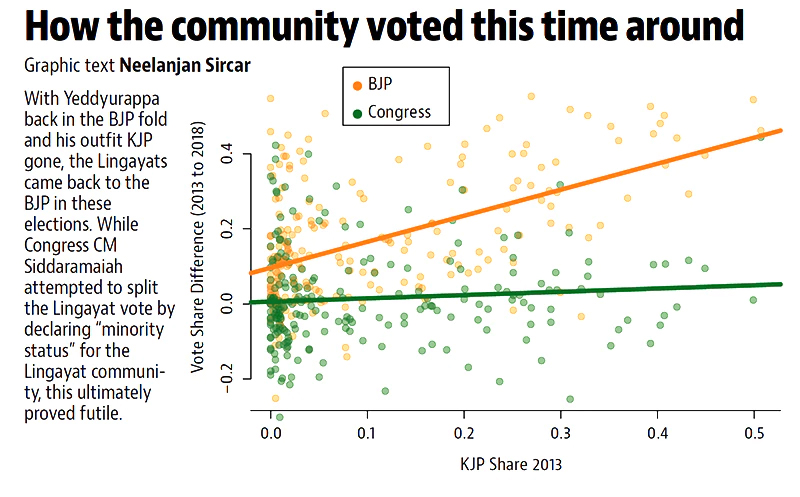
The announced alliance between the Congress, JD(S), has left the BJP seething. But this kind of an alliance would never been necessary had there been a pre-electoral understanding between these two parties. While the JD(S) wins many seats in South Karnataka, it often plays spoiler outside of the region.
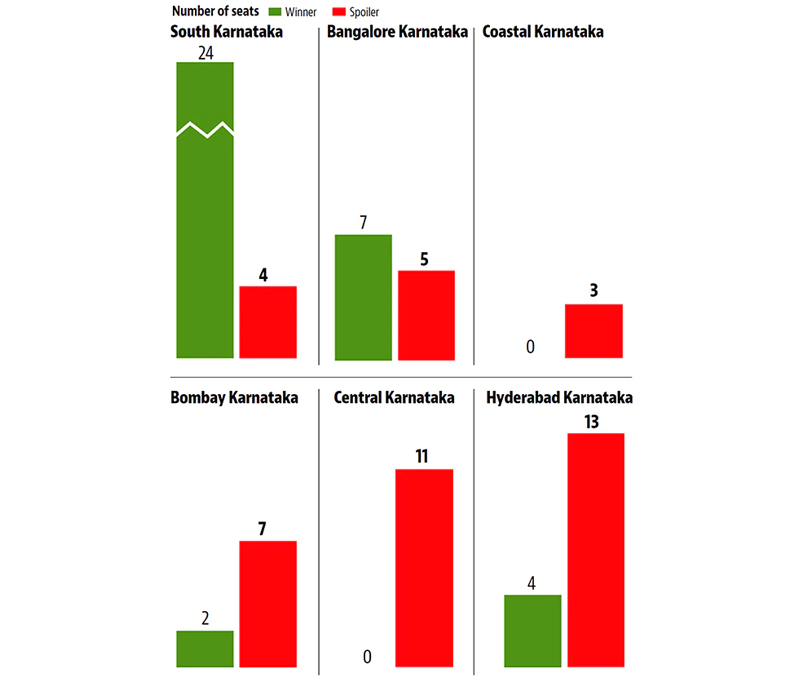
We defined JD(S) as a spoiler when it finished third or lower but had a greater vote share difference between the Congress’ and BJP vote share. In effect, these are the seats the JD(S) has no chance of winning but has enough votes to push the second place party over top. Thirty-one of the 43 seats in which JD(S) plays spoilers are in Bombay, Central, or Hyderabad Karnataka – areas with heavy Lingayat populations that came back to the BJP this time. There was little bias in whose fortunes the JD(S) spoiled. Of the 43 seats in which JD(S) was spoiler, the Congress won 23 and BJP bagged 20. (Graphic text: Neelanjan Sircar)
Blow to incumbents
The Congress got fewer seats than the BJP though its vote share was nearly two percentage points higher than the saffron party’s. A look at seats where incumbents lost, which may have hurt the Congress more than the BJP because the former had 122 seats.
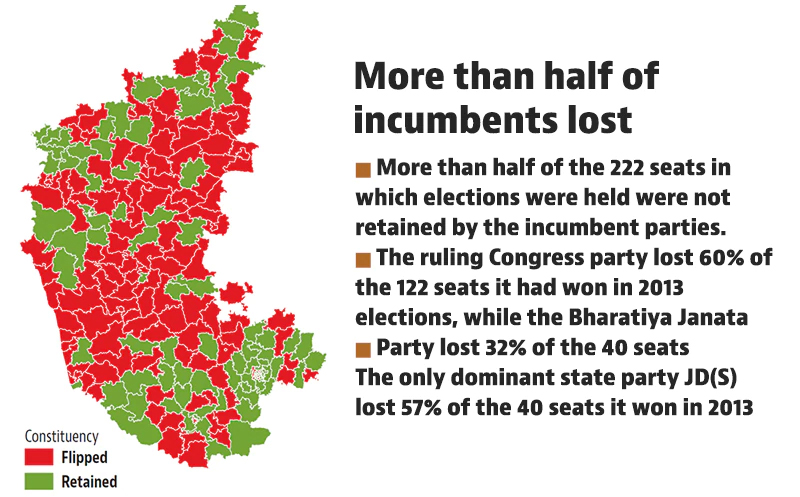
Sixteen ministers from the Siddaramaiah government failed to secure a win from their constituencies
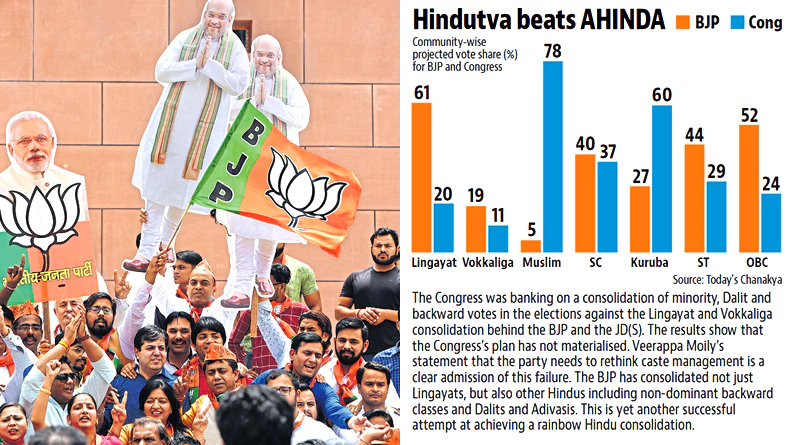
The Siddaramaiah government’s decision in March to grant the status of a minority religion to the Lingayat community backfired with the Congress emerging as the biggest loser. The Congress had banked on the support of the influential mutts (monasteries) of the community to back its decision and help sway a significant chunk of Lingayat votes in its favour. But it managed to win just 39 of the 104 seats in the Mumbai-Karnataka, Hyderabad-Karnataka and Central Karnataka regions where the community is dominant, a significant reduction from the 67 seats it won in 2013.
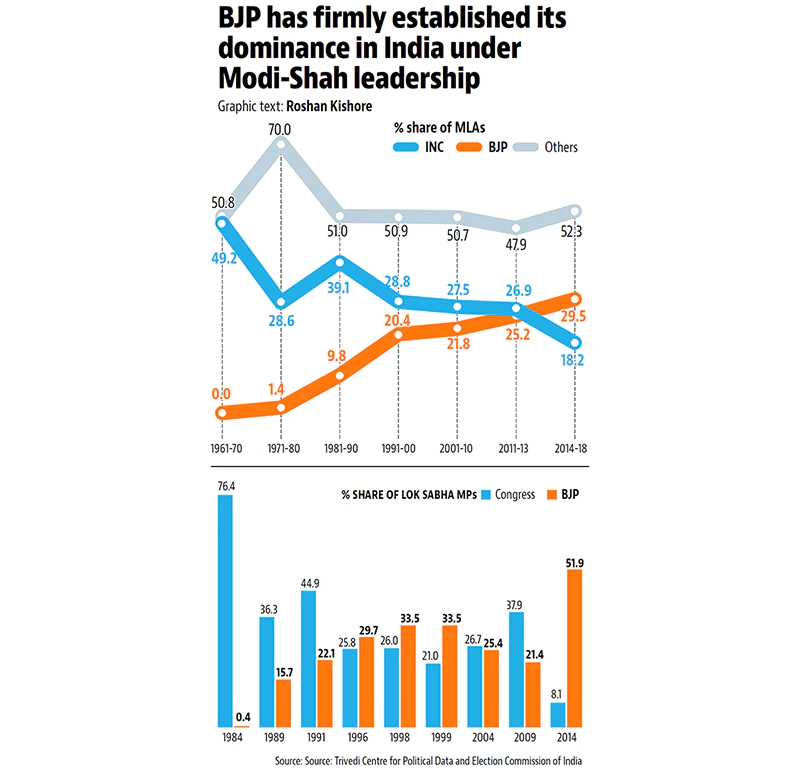
BJP dominates India and how
The Karnataka assembly election results reconfirm the dominance of Narendra Modi-Amit Shah leadership in national politics.
The data analysis has been carried out by Neelanjan Sircar, Senior Fellow, CPR, Roshan Kishore from Hindustan Times and How India Lives. The original article appeared in Hindustan Times.