- Home
- About Us
- Research
- Research Areas
- Agriculture
- Air Pollution
- Climate Change
- Economy
- Education
- Environmental Law & Justice
- Energy & Electricity
- Federalism
- Governance, Accountability & Public Finance
- Health & Nutrition
- Indian Politics
- International Relations & Security
- Jobs
- Land Rights
- Sanitation
- Social Justice
- State Capacity
- Technology
- Urbanisation
- Water
- Miscellaneous
- Research Initiatives
- Research Areas
- Publications
- People
- Events
Highlight>
Rahul Verma on Political Challenges in 2022
January 21, 2022
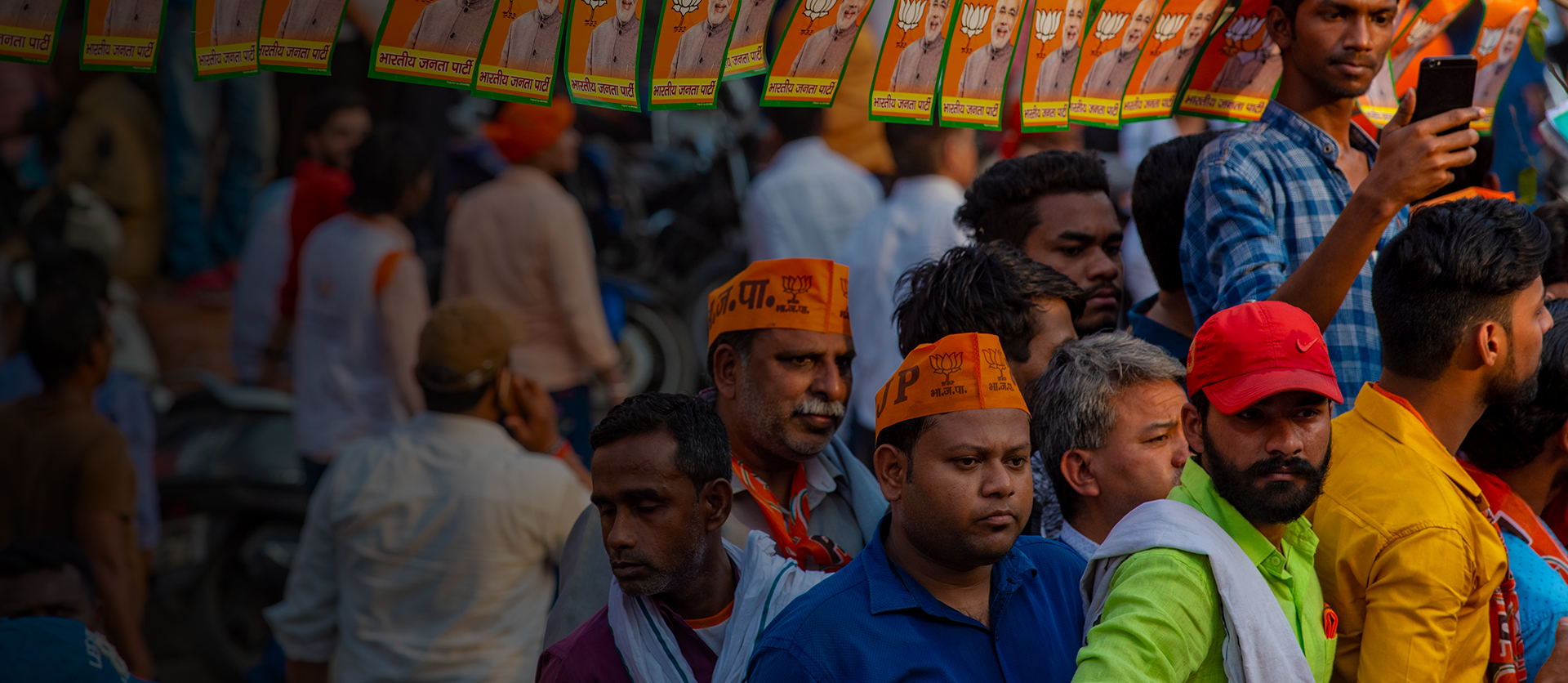 Rahul Verma is a Fellow at CPR. His research interests include voting behavior, party politics, political violence, and media. In this interview as part of the Leading Policy Conversations series, he discusses the political challenges India confronts in 2022.
What do you think will be the main political challenges for India in 2022?
There are always going to be multiple political challenges in a country as diverse and as big as India. We can view different problems from specific lenses, for example, COVID-19 can be viewed as a health challenge, poverty alleviation as an economic challenge, or developments on India’s borders as a security challenge. However, all of these are also inherently political problems that require political responses. Therefore, to point out one single political challenge is neither feasible nor desirable. Even in the political-electoral arena, we have multiple tensions and fractures emerging. The increasing polarisation in the society is tied to the trust deficit between political parties, and in turn putting democratic norms and value systems under strain. Various institutions of governance are showing signs of decay. Additionally, the economy is not looking in great shape and so accommodating the aspirations of millions of young Indians would become increasingly difficult. These problems are neither new nor unique to India, but these are some of the tensions that will confront policymakers in the coming year.
How should policymakers address these challenges in the year?
It would be naïve of me to suggest quick fixes to such complex problems. Even when policymakers invest time and energy to find solutions to these challenges, they do so in uncertain informational environments. And often the solutions offered would give rise to newer sets of problems and challenges. In some ways, we have to be open to humbling experiences while engaging with these complex problems.
Increasing political polarisation and trust deficit have created a strain on institutions and democratic culture in society. One way to address these issues is to find ways of increasing dialogue across the aisle. People on either side of the spectrum need to be convinced that we are in this together and unless we collectively join hands to minimise these tensions in society, the fractures are going to engulf everyone involved. To begin this, now is the time to stop the hyperbole, make a realistic assessment of our present and imagine a vision for India’s future. 2022 is the 75th year of Indian Independence and we must plan where do we want India to head as a society and as a nation by 2047, when the country celebrates its 100th year of Independence. This shared vision should bind us all and help us find ways to increase dialogue and decrease the trust deficit.