



At a time when the world is watching India’s rising urban and technological transition, the nation’s policy discussions are also engrossed in the development of its metropolitan and small cities through initiatives such as the Smart Cities Mission and AMRUT. Today, few of the significant changes are being witnessed beyond India’s metro cities like Delhi and Mumbai, in its small towns. This independent growth of small and medium-sized towns has been viewed as an autonomous phenomenon referred to as “subaltern urbanisation” in research and studies.
As foreign students in India, we had the privilege of witnessing this notable transition in late July 2026, when we went on a three-day fieldwork trip to Dhampur, a small town in western Uttar Pradesh. Dhampur, a notable industrial city, primarily known for its sugar and bioenergy productions, currently hosts a population of approximately one lakh residents. As foreign research observers, our main focus was on the intricate social realities, industrial drivers, and infrastructural deficits that define the life and landscape of a small town in India.
The Aspirational Grid and the Municipal Gap
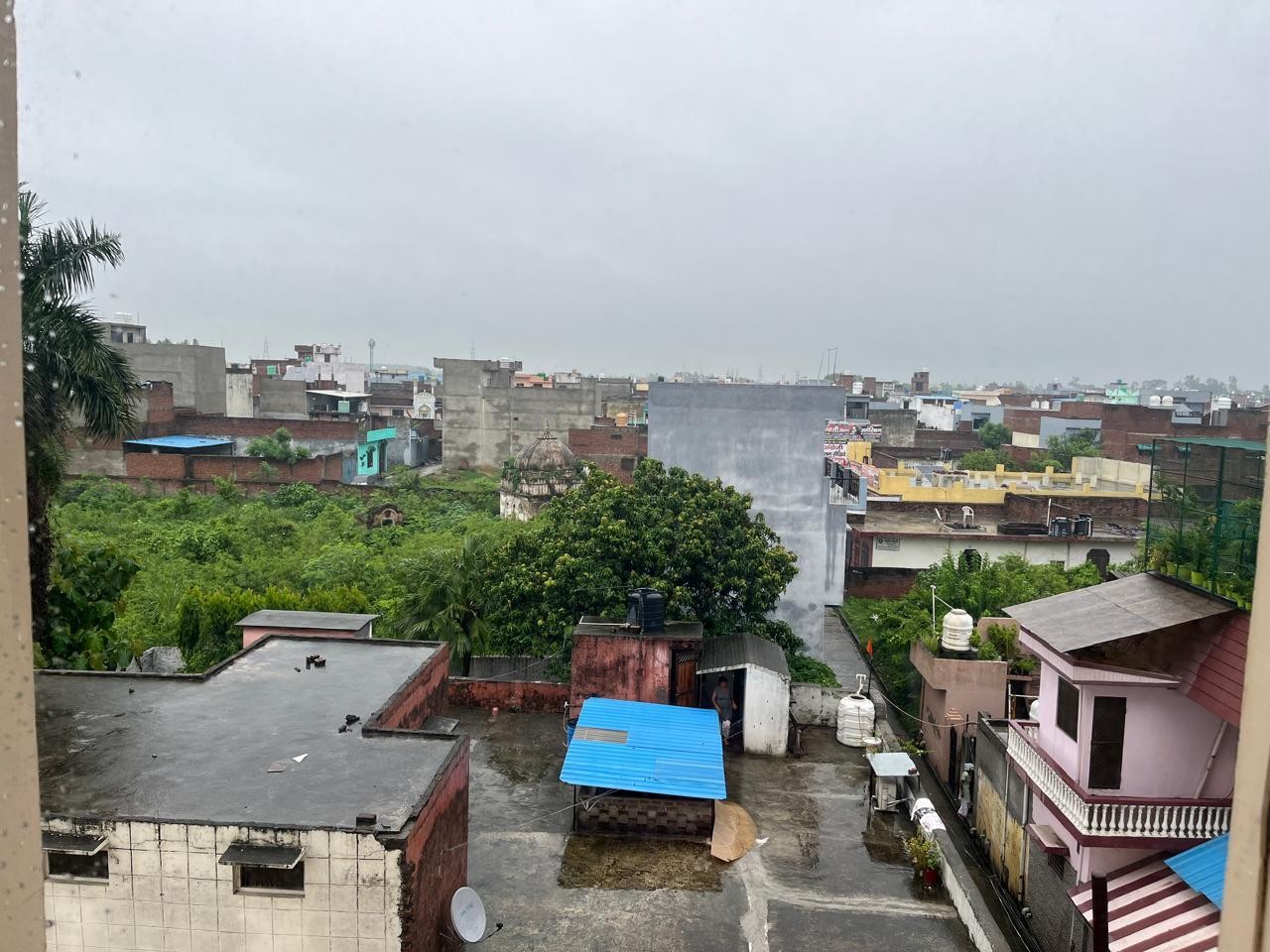
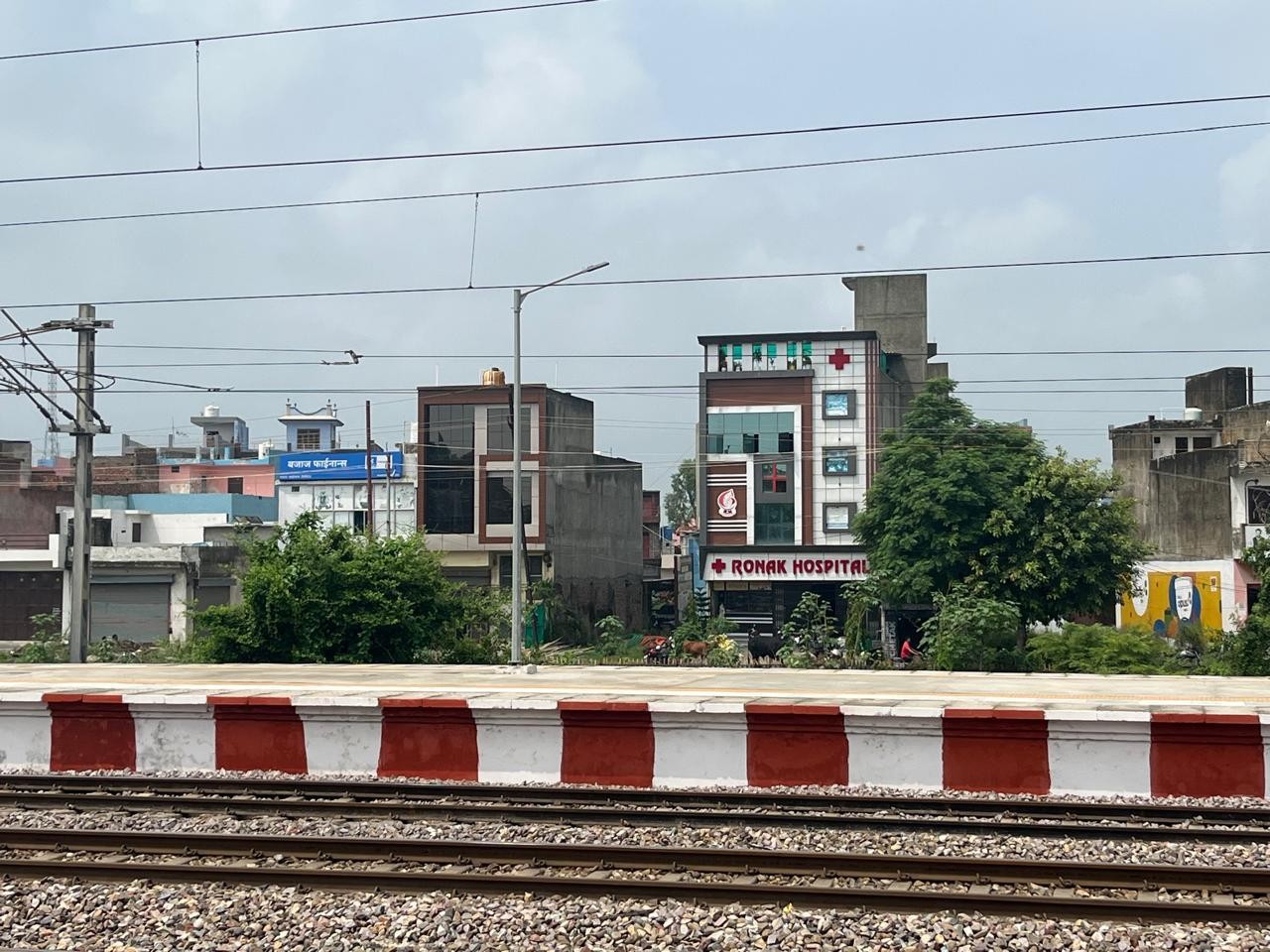
As we walked along Kalagarh Road, we couldn’t hide our astonishment at the commercial energy of a small town, with various goods and services shops lining both sides. To mention a few: dental and optical clinics, nursing homes with specialised care services, cyber shops, and various financial institutions such as banks (e.g. Axis, SBI, etc.), which clearly signalled diverse capital flows. At a store just next to Eurasia Palace (a 4-start hotel near Nagina Chowk where we stayed) a board read the message of a rapidly growing youth demographic: “We will teach you American English”. On another street, solar panels stood shimmering on the rooftops of commercial buildings, explicitly communicating the town’s movement toward sustainable sources of energy.
However, alongside this entire economic development landscape, there are clear deficits in other civic areas. A few meters from these infrastructures, an unmanaged roadside municipal dumpsite sits directly next to the tarmac road. While the municipality has installed public drinking water stations, drainage remains basic, and trash piles clog parts of the streets and drains. This raised a key question: is this mismatch an illustration of a core challenge in subaltern urbanisation? Employing Richard Thaler and Cass Sunstein’s Choice Architecture, which posits that public spaces should “nudge” individuals toward sustainable behaviours, a well-designed city makes sustainable choices straightforward and accessible. This understanding led us to question whether the choice architecture for Dhampur’s local citizens is broken. Local residents depend on private or government solutions for essential services such as education and healthcare, while basic civic solid waste and drainage management lag behind the current commercial expansion.
The Economic Powerhouse: Sugar, Beverages and Subaltern Capital
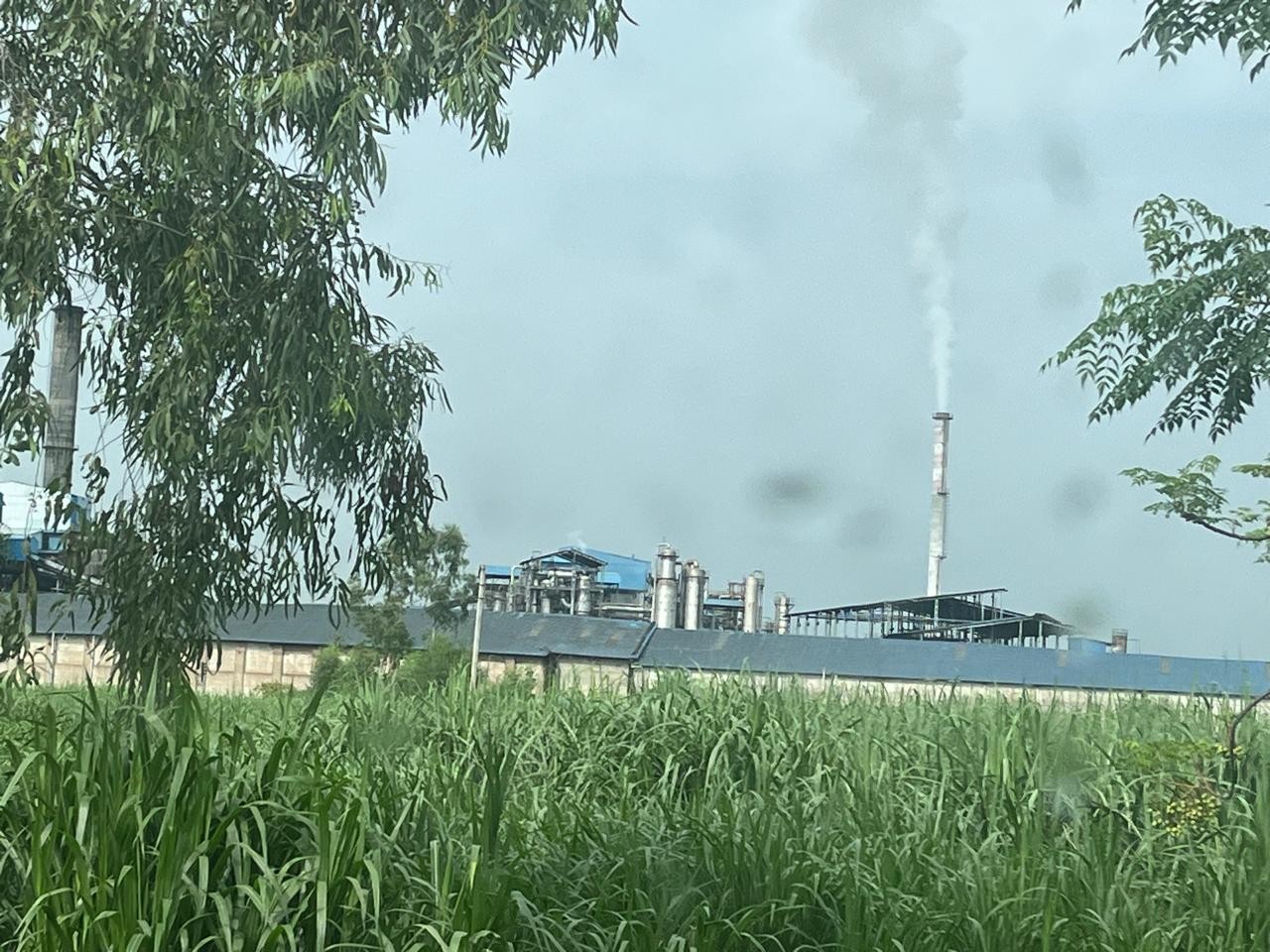
Dhampur’s economic transformation is intricately connected to the industries and businesses that have developed within and around the town. During our visit, we saw this most clearly at the Dhampur Sugar Mill, established in 1933 (the largest sugarcane processing company in Asia). Over the years, Dhampur’s sugar industry has been an integral part of the town’s economy, and the mill has increasingly diversified its production into ethanol, chemical byproducts, and its own power generation all from sugarcane waste. Such diversification towards waste management speaks volumes about the town’s march towards a circular economy.
Our next visit to a family-owned local drinks processing plant gave us a different glimpse of Dhampur’s economic progress. The plant, which currently employs 40 workers from the local community, grew out of a family business that had been invested in the wood and timber trade for generations. Currently, the company not only processes drinks but also engages in other stages of production and distribution, such as manufacturing plastic bottles from preforms, branding, and regional in-house distribution of the end products. Today, products such as Jeera (cumin seeds) masala drinks and packaged mineral water are sold in Dhampur and its neighboring areas and states such as Haryana.
All these observations and interactions sent a clear message that resonated with our field trip: established industries and the entrepreneurial spirit of local actors play a key role in the economy of a small town like Dhampur in India. The town’s economic activities are increasingly connected to markets beyond its municipal boundaries. At the same time, this expansion raises an important question: Does the town’s organic economic growth match the municipality’s infrastructural, planning and regulatory capacity, or does it widen the public utility gap?
Silent Negotiations: Navigating Gendered Smalltown Spaces
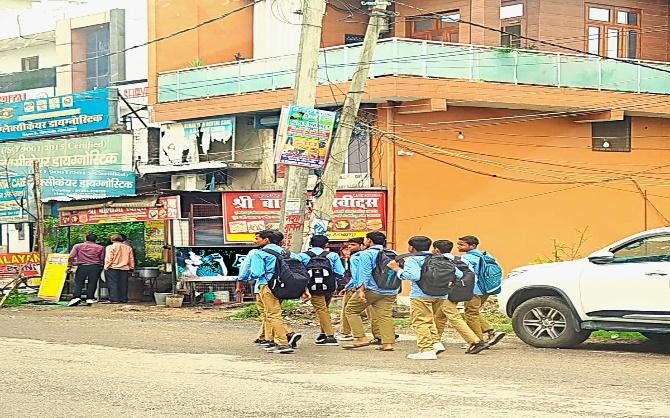
One question that stayed with us during our field visit was: who is visible in Dhampur’s public spaces, and who is not? Walking the streets of Dhampur from early morning starting at 6:00 am, we witnessed a public space defined by deeply gendered segmentation. From open eateries and small shops exclusively run by men and school students (boys and girls) commuting on foot, bicycles, buses, or e-rickshaws in the morning, to a hardening disparity during the day – where men remained dominant in retail stores, businesses and the historic 1885 Dhampur Railway Station. Considering Henri Lefebvre’s idea that space is not simply physical but is also shaped by social relations and everyday practices, it was clear that while a street may be open to everyone, diverse groups experience and use it differently. In Dhampur, our observations suggested that commercial public spaces remain more visibly occupied by men, raising more specific questions: Where are the women in Dhampur? Are they immersed in the urban informal sector or in invisible, home-based activities that are not recognised in the commercial urban landscape?
As we hoped to find answers to this important question on social inclusion, an unexpected emotional connection took us back to our initial stop on our way to Dhampur at a small village Chandpur Siau. Our supervisor, Dr Pushpa Pathak, had stayed there with a family during her doctoral fieldwork in 1979 and remarkably the family’s elderly matriarch and her daughter recognised her. As the two recollected memories spanning nearly five decades, connecting Dhampur’s social landscape experienced in 1979 with the one we observed today provided a powerful foundation.
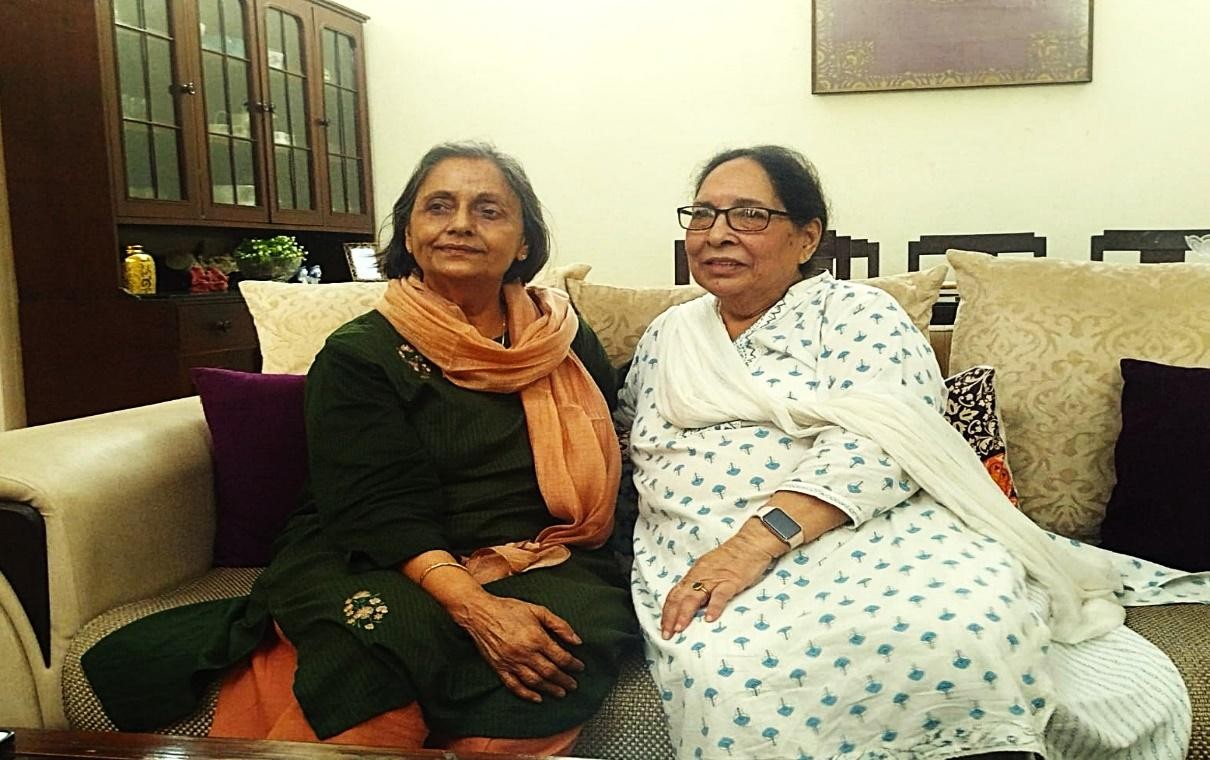
In the past, women in Dhampur lived in domestic seclusion but our trip gave us a glimpse of physical and social walls that are slowly shifting over time. As our fieldwork intensified later in the day, we saw women running family retail shops in place of husbands who were out for meetings, managing vegetable stalls in the markets and working in sugarcane plantations. This was a clear indication that women in Dhampur are slowly and steadily claiming visibility in the economic sphere: though the numbers remain small, it is a sign of a much-needed qualitative shift. Women are progressively claiming their agency in the public spaces in small towns by quietly negotiating established norms.
Our three-day visit to Dhampur left us with a clear understanding that inclusive urban planning cannot rely solely on metropolitan models. If small towns are to remain liveable and equitable, municipal capacity must be systematically upgraded to support rapid private sector growth. Furthermore, urbanisation policy must actively engage directly with the local community. This calls for women-friendly public spaces, microfinance networks and local cooperatives to transition women from unpaid household helpers into formal, self-employed entrepreneurs and small-town public utilities designed to nudge communities toward sanitation and environmental hygiene while accommodating the diverse mobility needs of all genders.
True economic urbanisation cannot be measured solely by industrial output. It must be measured by how successfully a town allows all its citizens to step out of the shadows of history and into the active life of the shared street.
Reflective Note on Cross Country Urban Dynamics
My visit to Dhampur reminded me of being in secondary towns Naivasha, Machakos and Kitale in Kenya. There is an evident vibrant rural-urban momentum in both contexts with increasing commercialization, private mobile shops and financial services, and aspirational youths, but this growth is shadowed by county lags like open roadside waste and drainage deficits. However, the gender organization and visibility in public spaces differ significantly. While women in small Kenyan towns maintain dominance and appear highly visible in open air retail and street commerce (the quintessential “mama mboga”), Dhampur’s commercial streets are male dominated, with adult women’s economic labour heavily concentrated in the informal spheres.
– Claireshelmith Mwende Macharia, Kenya, East AfricaDhampur made me think about Téra in Tilaberi region (Niger) in different way. Both are small town (even though Dhampur has become an important regional hub) that connects surrounding rural communities with markets and services, but I will not deny that their levels of urban development are very different. Dhampur has a railway station, extensive road connections, numerous schools, public and private health care facilities, banks and a much more diversified commercial economy. Téra remains more closely connected to agriculture, livestock and basic regional services. Yet this contrast is revealing; being a regional hub is not only about infrastructure or size, but also about the role a town plays in connecting people, livelihoods and surrounding rural areas.
– Bel hadj Moussa Garba, Niger, West Africa.
(The authors are students of MBA in Sustainable Development and Management programme at Nalanda University. They are from Niger and Kenya respectively and were summer interns with the Urban Team at the Centre for Policy Research. They accompanied Dr Pushpa Pathak (Senior Fellow, CPR) on a field trip to Dhampur, Uttar Pradesh along with Mr Shubham Kashyap (Research Assistant, CPR) and Ms Divya Tiwari (Documentary Filmmaker).