Odisha Model of Urban Development: Decentralisation and Empowerment, discusses the key approaches and facets that underlay the highly successful urban development initiatives implemented in Odisha for close to a decade. The application of governance principles of decentralisation and empowerment in a consistent, contextual, strategic and tactical manner across sub-sectors, be it drinking water supply; environmental sanitation; municipal waste management; slum land rights and infrastructure upgrading or others has led to the development of the Odisha model of Urban Transformation. The book details out the conceptualisation, design and learning processes of the various urban initiatives rolled out in the state undertaken by the Government of Odisha. The book recounts how inclusivity and community partnerships in each of these innovative initiatives catalysed a sweeping transformation in Odisha’s urban landscape, achieving remarkable speed and scale.Most of these interventions have been accorded multiple national and global accolades.
This book is co-authored by Mathi Vathanan, a senior Indian Administrative Service officer of the Odisha cadre (presently Director General of the State Administrative Training Institute) who headed the Housing and Urban Development Department for about a decade and under whose leadership various urban transformative initiatives have been implemented in the State, and Mr. Shubhagato Dasgupta, a well-regarded urban development professional, Senior Fellow at the Centre for Policy Research and presently also Team Lead, SCIAI programme at GWSC, AIT, Thailand. They have been working closely together since 2015.
The book documents and deliberates on the reasoning behind the various innovative approaches designed and adopted while planning, implementing and monitoring these initiatives. It provides an insider’s perspective on the thought processes that inform the development of public programs that focus on the wellbeing of citizens. Therefore expectantly, this book would be of immense interest and use to the academic and research community including students. This book could also be a source of inspiration on what could be achieved and can be a valuable guide for other governments, city administrations, specific sector professionals and urban practitioners.
This book chronicles Odisha’s transformative urban journey, offering an insider’s perspective on its most ambitious initiatives. It explores how programs aimed at improving urban life particularly those focused on uplifting marginalized communities and integrating the urban poor, including slum dwellers were central to Odisha’s urban growth narrative. By highlighting both the challenges and the resilience behind these efforts, the book showcases Odisha’s vision for equitable and sustainable urban spaces.
The papers in this volume—Age of Ferment: Developments in Asian–European Trade Relations— examine the role of trade in facilitating recovery from the COVID-19 pandemic. The publication contains two sections. The first section deals with Asia’s global value chains’ transformations in selected sectors and also provides a sketch of the region’s economic trajectory following these systemic disruptions. The second section analyses Europe’s evolving trade relations with Asia using the recent free trade and investment agreements as lenses. As trade relations become increasingly more complex, it is essential to find common ground to ensure an inclusive recovery from the ravages of the current crisis. We hope that the perspectives offered in these papers will be able to contribute to these efforts.
Environmental protection has not equally established itself as a permanent fixture in the political systems of all countries: to date, governments and entire societies have responded to environmental challenges in a variety of ways, and concrete environmental policy is still a highly national matter. Moreover, the perception of environmental problems varies considerably on a global scale. The reasons normally cited for these differences largely stem from the environmental policy debates themselves, e.g. poverty, ignorance, capital interests, etc.
In contrast, this book shows that concrete environmental policy emerges from a complex interplay of mass media and political conflicts: first, the mass media provide the framework for national environmental policy through agenda-setting, framing and scandalization; second, the mass media thereby change values in the political and social discourse, e.g. by altering the perception of global commons and expanding the possibilities of interest articulation; and third, this can lead to political decision-making processes in which legal and other measures for environmental protection are enforced. The book systematically compares industrialized countries such as Germany and Japan with several rapidly emerging countries in South and Southeast Asia.
The edited volume is a collection of essays and cases on water federalism. The contributors are a well-known group of academics, practitioners, and civil society actors. Commissioned by the Hanns Siedel Foundation in collaboration with Asian Confluence, the book makes a conscious effort to go beyond the dominant lens of interstate water disputes to engage with a range of dimensions of water federalism.
India’s long term water security interests lie increasingly in the realm of cooperative federalism. The flagship programs like river rejuvenation or inland navigation depend on the crucial element of Centre-states and interstate coordination. The book makes a humble and modest beginning to draw attention to this critical dimension. It is available for download here.
This book discusses effective social innovation strategies facilitated by civil society organisations (CSOs) to tackle India’s significant urban sanitation challenge. It presents the contours of an ecosystem that includes citizen participation and strengthening community-managed systems for improved sanitation and public health.
The book analyses case studies of effective sanitation programmes as well as experiments with innovative ideas in different regional contexts by CSOs to meet the contextual needs of the community and to ensure access to safe sanitation, especially among the urban poor. It highlights the challenges and the need for active participation of communities for change in behaviour, increasing institutional capacities of municipalities for standardising and scaling up strategies which work. The authors highlight the need for designing low-cost solutions, organising informal sanitation workers, serving marginalised communities and building effective alliances between communities and institutions to influence public policy.
Rich in empirical data, this book will be useful for scholars and researchers of urban studies, public policy, governance, political science, development studies and sociology as well as for CSOs and non-governmental organisations (NGOs) working on urban sanitation, urban planning and public policy.
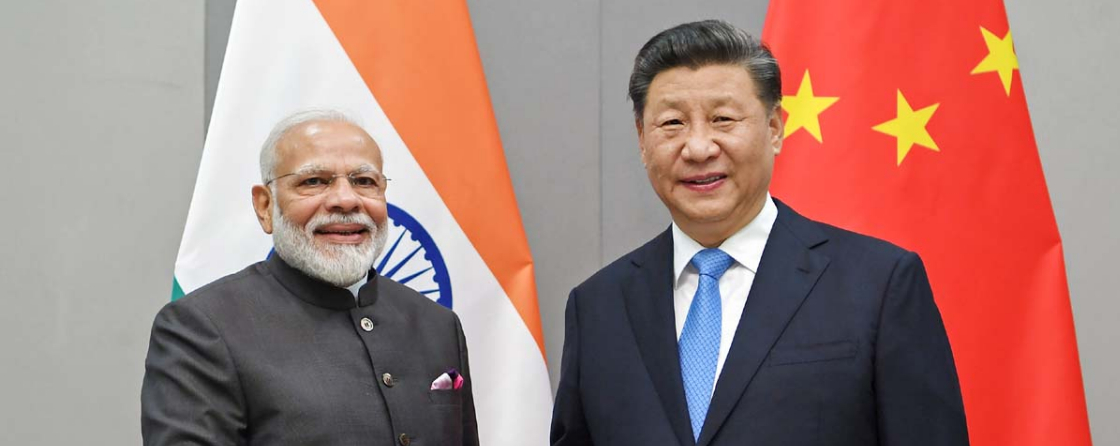
In this magisterial book, acclaimed diplomat Shyam Saran (arguably the country’s greatest expert on China) writes the most authoritative account of the India–China relationship and how China perceives our country.
Saran starts his story with the rise and fall of Buddhism and its spread through the trade routes that connected India to China and China to Europe through Central Asia. As he recounts this gripping story, he questions, too, the Chinese claim that it was the most important and influential civilization of the ancient world, arguing that it was India who played that role.
As a work of history, How China Sees India and the World is superb and tells its story not just in big, bold strokes but also through entertaining nuggets such as the spread of the chopstick, or how the word ‘zen’ arose from ‘dhyan’.
As a work of political analysis, especially of contemporary China and India, it is erudite, acute and strongly argued, based on close readings of contemporary Chinese scholarship, CCP leadership speeches and writings, and through Saran’s own experiences as diplomat and Foreign Secretary. Authoritative and utterly compelling, How China Sees India and the World is a masterpiece – a work that will become a classic.
Development of Environmental Laws in India highlights the dynamic nature of environmental law-making in India between the judiciary, the executive and the parliament. This has led to the creation of a wide range of environmental institutions and bodies with varied roles and responsibilities. The book contains a large volume of materials from the late 1990s, which show a marked shift in the nature of environmental governance in India. These materials offer an understanding of the contemporary debates in environment law in the context of India’s economic liberalisation. The materials are thematically organized and presented in an accessible manner. The chapters contain definitions and specific clauses from the legal instruments and refer to court orders and judgements on these themes.
Regional economic engagement within South Asia may gain increasing importance owing to several factors that are currently in play, including strategies to diversify global value chains and locate such value chains nearer home. These developments offer South Asia a chance to enhance its low levels of regional economic engagement and capitalize on significant unrealized development opportunities. This report shows that examining intraregional investment and knowledge connectivity enhances our understanding of the low levels of intraregional trade and limited regional value chains in South Asia. Creating a new and unique data set for South Asian investment, it provides a detailed and nuanced understanding of the drivers of outward investment, both regional and global, for South Asian firms. “Regional Investment Pioneers in South Asia” provides key considerations for policy makers in South Asia, which remain particularly relevant in the aftermath of the pandemic. First, it makes a case for regulatory relaxation of outward FDI regimes, based on new micro foundations, grounded in value chains. Second, it spells out details of smart inward FDI promotion techniques and investment facilitation. Third, it identifies distinct cross-border information-enhancing and network development activities. Fourth, it suggests that digital connectivity and continued interventions in reducing trade costs are warranted to increase investment as well as trade flows. There is particular scope to build on the digitalization initiatives in trade and investment facilitation taken during the pandemic. “Regional Investment Pioneers in South Asia” follows on, and is complementary to, the earlier World Bank report, “A Glass Half Full: the Promise of Regional Trade in South Asia.”
Broke to Breakthrough is a business biography of India’s largest dairy products company – Hatsun Agro – and its founder R.G. Chandramogan.
Hailing from Virudhunagar district of Tamil Nadu, Chandramogan started this venture in 1970 as a twenty-one-year-old, making ice candies with three people in a 250 sq. ft. rented place and selling in pushcarts. By the mid-1980s, ‘Arun’ ice cream had become the market leader in the state. But Chandramogan didn’t stop at that – he branched into the dairy business by leveraging his brand-building experience with ‘Arun’ and forging connections with farmers.
Thus was born Hatsun Agro Product. It is today a Rs 5,500 crore-plus company that also has pioneered a unique model of directly procuring milk from over 4 lakh farmers (B2F) and selling only branded consumer-facing products (B2C).