
Understanding the Outcomes and Remedies sought for impacts of Land Use Change

BLOG SERIES BASED ON A CROSS COUNTRY STUDY ACROSS INDIA, INDONESIA AND MYANMAR


In situations marked by grave injustice, fear, loss and confusion, affected communities articulate their grievances and seek out institutions to address them through remedies that are meaningful to them. The process of seeking remedies by affected communities helps not only to politicise questions of democratic decision making and land governance but also improves land and project governance outcomes. They take on the role of asking questions, monitoring and seeking accountability in a hostile environment of risk of intimidation and criminalisation. People affected by land use change seek a variety of remedies for the impacts they face. While some of these are towards short-term relief and one time payments/aid, others are towards long-term participation in projects. Some seek complete closure/suspension of projects, others are towards remedying the harms caused by ongoing projects or putting in systems in place to prevent further damage to their environment and livelihoods.

Using the above categorisations, this blog discusses key remedies that have been sought in the countries of India, Indonesia and Myanmar.

One-time assistance: compensation and better relocation

i. Compensations are sought by the affected people in return for the land acquired, and/or livelihood lost, as a one-time payment prior to the setting up of the project. In case of the Thilawa Special Economic Zone (SEZ) in Myanmar, while its first phase has started, communities’ expectation from the project have changed: initially they were refusing to relocate, then they switched to seeking better relocation facilities, now the group is preparing and organising itself to run a community driven organisational grievance mechanism. Simultaneously the farmers who know they would be relocated for the second phase are thinking how much compensation would they demand and strategising and organising on this expectation.

Compensations are also sought when project operations directly or accidentally damage water resources and/or farms or reportedly cause health impacts. The challenge arises when the affected people seek compensations from either the administration or the company. In the Uttara Kannada district of Karnataka, the construction of a National Highway is presently underway. Following a series of complaints and meetings with the Pollution Control authorities, the company operating a stone crusher for the project in Bogribail village, paid compensation to affected farmer families in December 2016. The affected people felt that this was far from adequate as the stone crusher continued to emit dust and damage their farmlands.

Despite the routine use of compensation as a way to remedy impacts borne by communities, it has been observed that across the countries, communities have little or no information how the compensation is to be calculated, how to assess if what they are getting/demanding is fair.

ii. Relocations are ideally provided prior to project start but the quality of relocation sites continue to be a festering issue for communities even after projects start operations. The case of Thilawa from Myanmar offered an interesting example. The Thilawa Social Development Group (TSDG) formed by the farmers who had to vacate their land for the first phase of the project made a visit to the relocation site for Dawei SEZ and saw the difference between what they were being offered and what Dawei evacuees were getting. They made a demand with the Japan International Cooperation Agency (JICA) for better compensation and improved basic amenities at the relocation site. While JICA increased the compensation to the farmers, not much improvement was seen in their living conditions.

Continued participation in project through financial stakes and benefit sharing

In Indonesia, it has been observed that in many cases of land conflicts, farmers opposing land takeover by plantation companies are offered plasma agreements as ‘fair’ remedy for their concerns. However, beyond the stipulation that the companies are expected to reserve 20% of their total plantation area for smallholders and provide them technical assistance in oil palm cultivation, plasma agreements are not governed by much. Usually a farmer cooperative enters into an agreement with the company. The farmers give a minimum of ten hectares of land for plasma to the company, become a part of the cooperative and receive share certificates for two hectares of plantation each. In most cases, cooperatives come to be managed by the office bearers of the village or others with might or money. Although on paper the cooperative has the autonomy to develop and manage plasma, in practice, decisions regarding land allocations, recruitment of labour and sales price of the palm fruits are made by the company.

Another example of taking part in the development activity is of Korba Bhuvistapit Company Limited from India. In the Korba coal-mining region in Chhattisgarh, over 2400 families who have been displaced but have not been provided jobs have come together to form this producer company. The main objective of the company is to demonstrate that communities can undertake activities including transportation, plantation and renewable energy and to maintain moral pressure on South Eastern Coalfields Limited (SECL) to provide opportunities for ancillary activities to the displaced members.

Partial or full closure of project

People affected by land use change also approach different institutions or use a variety of strategies that are clearly directed towards closing down the construction or operations of an existing project. This is often the case in two instances: first, when a project has recently initiated construction activity, and there appear to be possibilities of holding back land use change; and second, when several attempts at seeking compensations, employment or restoration of damage have failed and/or the project continues to impact the health/livelihoods of communities living in the nearby areas.

i. Project suspension: One of the landmark cases from India where few villages affected by the proposed land use change by a steel plant and port consistently demanded that the project’s construction activity not be initiated was the POSCO steel plant and port in Jagatsinghpur, Odisha. Every time the project authorities would initiate activities, there would be strong local protests and barricading disallowing the construction activity. Challenging the project approvals in court with the help of national NGOs and lawyers was the other strategy so as to hold back land use change.

Sometimes these demands for suspension of projects arise due to the non-participatory manner in which decisions are made. In case of Tarpein I and II dams in Kachin State of Myanmar, the Kachin Independence Organisation (KIO) deployed soldiers around the two dams and suspended their construction work when the Chinese authorities of China Datang Corporation (CDC) company refused to pay taxes to KIO. KIO also complained that local residents were not given any role in decision-making on these projects.

ii. Revocation of permits has been sought in cases of environmental degradation caused by mining in Jambi province of Indonesia. Pursuing this remedy, the communities along with other efforts, reported the cases to the Anti-corruption commission (KPK) in the hope that it would investigate the issue and eventually order suspension of their permits. As part of its investigation, the anti-corruption commission visited these mining sites. However, only one project has seen closure.

In case of the sulphuric acid factory near Letpadaung mine in Sagaing Region in Myanmar, the villagers demanded complete closure/relocation of the factory due to the dangers associated with toxic fumes emitted by it. While some cases see a change in people’s demands for remedies over time, in Myanmar, hydro and thermal power projects have been in suspension for a long time perhaps due to persistent demands.

Repatriation of land

This demand is made when a project has withdrawn from an area, and the affected people would like the land back to restore livelihoods, e.g. POSCO in Jagatsinghpur. After the private company has withdrawn from the project, the state government is seeking to build a wall around the land to protect it from ‘encroachments’. The villagers are demanding that the land be restored to all the forest dwellers whose rights are yet to be recognised under the The Scheduled Tribes and Other Traditional Forest Dwellers (Recognition of Forest Rights) Act, 2006.  More recently, the demand for this remedy has also been fuelled by the existence of a new legal clause as part of the 2013 Land Acquisition Law

Sometimes, after repatriation of land reverting to the original land use is not possible. In such cases communities pursue possibilities of owning the altered land use activities for their livelihood. This remedy can be a follow up to closure of a project and return of their land. In the case of PT Rejeki Alam Semesta Raya (RASR), active in Kapuas regency of Central Kalimantan in Indonesia, farmers of Sei Ahas village were pursuing the return of their land right from the beginning of the conflict in 2007. The lands were collectively held rubber plantations, which were turned into oil palm plantations by the company. While the group of farmers that demanded the return of their land shrank over the years as many accepted plasma agreement after their initial opposition, a group of 20 farmers continued with their initial demand. The farmers want the company to rescind its claim on the land and plantation so they can harvest the oil palm.

Restoration

This remedy is usually observed in cases of environmental degradation or damage to land caused by dumping of waste or extraction due to mining operations.  This remedy could be followed by closure/suspension of a project or a commitment by the project not to contaminate the land/water again. For instance, in several parts of India where sand mining has led to erosion or salinity ingress, people have sought that the activity be stopped and the area be restored.

In the case of activities of BNJM-KGLR in East Barito in Central Kalimantan, Indonesia, the villagers sought the restoration of the river that was heavily silted due to dumping of mine refuse by the company, to its original condition. The farmers also sought compensation for the damage they incurred in the past when the mud from the river ended up on their rubber plantations and left their crops dead. When asked if farmers would be in agreement if the company continued to pay for damages in the future while continuing to pollute the river, many didn’t reply in the affirmative. The villagers of Lalap and Bentont villages wanted the company to restore the river and abide by environmental laws in future.

Proactive measures as remedies

The demand for closure of a plant is often a big challenge for the affected people who are directly dependent on the plant for livelihoods. In such cases the remedies sought are towards making sure that the operations do minimum/no damage. They may want an assurance that the project would not be expanded in future, or compliance record of the project would be part of any future project decisions or policy changes such as communities are granted effective role in project monitoring. Realising that the land use change is unavoidable, they may even want to own the changed land use activity. This can be viewed as a proactive measure on part of communities to offer an alternative to private/government owned projects.

In India, villagers in Tamnar block of Raigarh district of Chhattisgarh registered their own firm and called it Gare Tap Upkram Producer Company. The idea behind establishing the firm was to mine the coal themselves rather than surrendering their land to industrialists. More than 500 villagers from 12 adjoining villages of Gare had pledged nearly 700 acres of land to the producer company. As they deliberated further on the issue of mining, the villagers decided against mining altogether and instead proposed setting up of production of alternate energy so that the land is not devastated by mining. The Gare Tap Upkram Producer Company has subsequently approached the Environics Trust, a national NGO, and requested it to conduct a study on the feasibility and willingness of the inhabitants of Gare in adopting alternate sources of energy, predominantly in solar and biogas energy.

In case of the Tigyit coalmine in Shan state of Myanmar, although the residents made peace with the operation of the mine, which has been operating in the area for nearly 20 years, their demand is that the project not be expanded. The residents spent their energies in resisting a thermal power plant to be cited next to the mine and were successful in suspending the plant. They opine that if the thermal power plant doesn’t run, the mine would not be given an expansion by the government. However, after being shut for two years, talks for the resumption of the thermal power plant are on and the villagers are bracing themselves to resist it again. As of end of 2017, test runs on the plant were being conducted and the government maintained that the plant will not be allowed if it is found to be linked with harmful impacts on health and livelihoods of the residents of Tigyit village in Shan state.

There are several remedies or outcomes that the affected communities succeed at getting. The study, Understanding Land Conversion, Social Impacts and Legal Remedies in Asia, through the country reports and the case studies, demonstrates that although these are mostly only limited successes, they surely are positive stories of collective agency and change. Albeit small, communities who struggle to get them view these as important victories.

This is the third blog based on the study carried out by the CPR-Namati Environmental Justice Program, supported by a grant from the International Development Research Centre, Ottawa, Canada.

Other blogs in the series can be accessed below:
Understanding the Strategies used to address the impacts of Land Use Change

BLOG SERIES BASED ON A CROSS COUNTRY STUDY ACROSS INDIA, INDONESIA AND MYANMAR


People facing/likely to face the negative impacts of land use change may not communicate their grievances immediately. When these impacts are communicated to the project entity or the media or the government and collective action is taken towards addressing the impacts, they become cases of conflicts. The strategies that communities deploy during the course of a conflict could range from a single one-time action for a single remedy to engaging with multiple strategies for one or different remedies.  For instance, an affected community may choose to go to court to seek directions for increasing compensations or addressing pollution harms. Another group of affected people may approach one government agency for addressing water contamination and/or take to the streets to resist additional acquisition of land and/or engage the media to create awareness about the loss of livelihoods. These can take place all at the same time or at different stages of the conflict and the project. Below is a tabular synthesis of key strategies used in the 75 cases of conflicts, as reported in the media, analysed for each of the study countries- India, Indonesia and Myanmar.


* T: Total number of cases in which a particular remedy has been used; S: Used singly; C: Used in combination

The above analysis makes it clear that most often communities deploy multiple strategies. Presented below are examples of how these strategies have been used in the three countries. The examples demonstrate that there are only a few instances when a strategy can be linked with a clear success. Most often they stop short at certain interim outcomes such as an inquiry or an investigation or they start to head towards a specific outcome only to be turned around at a later stage.

Protests

India: The proposed amendments to the new 2013 Land Acquisition Act in December 2014 led to a nationwide farmers’ protest in India. In August 2015, in light of protests and ahead of the Bihar state elections, the government of India held back the proposed amendments and referred the matter to a Joint Parliamentary Committee (JPC).

Myanmar: In Shan State in 2016, 100 farmers from Ye Pu village in Taunggyi planted on 2,000 acres of confiscated land. Between 2010 and 2015, despite the land being confiscated the farmers were allowed to plant on the land on a payment of 10,000 Kyats per acre. In May 2016, the farmers were asked to sign documents transferring the land to the army. These 100 farmers didn’t sign the document and continued planting. The army filed a lawsuit against them for trespassing.

Litigation

Indonesia: Responding to a civil suit, the Bandung administrative court decided in April 2017 that expansion plans for the Cirebon coal-fired power plant in West Java were in violation of the local spatial planning law. The court ordered the project’s environmental license to be revoked.

India: A case against the Parsa East Ketan Besan (PEKB) coal mine was filed before the National Green Tribunal, the special court for environmental cases, and a judgment suspending the forest diversion approval was given. This was challenged by the operating company before the Supreme Court, where the court allowed mining to continue even as the environment ministry was to review its recommendation. The matter has been subjudice since 2014.

Administrative complaints and appeals

Indonesia: In the case of BNJM coalmine in East Barito in Central Kalimantan, the local environment agency on request from communities, collected samples from the river being polluted by the mine refuse. However, this was done after the community of Lalap and Bentont villages had filed multiple complaints with photographs and media reports on the siltation of the river. In this case, strong evidence of the violation of environment laws helped in getting the government to take action.

India: In the case of the proposal to construct the Tadadi port in Uttara Kannada district of Karnataka, local villagers and environmentalists primarily engaged with the District Collector and the regulatory institutions to influence the decision on whether the port should be granted approval. Although the environment ministry’s expert committee recommended approval in December 2016, the project had not been issued a formal clearance letter and has not initiated construction activity.

International Redress

Myanmar: Thilawa is one of the few projects from the delta region in which international redress has been tried. The Thilawa Social Development Group (TSDG) contacted the Japan International Cooperation Agency (JICA) seeking rehabilitation and relocation facilities as per its guidelines. In response, JICA increased the compensation and improved facilities at the relocation site. Although the relocation site still falls short on many of JICA’s own prescriptions, the efforts resulted in certain corrections.

Indonesia: An example of seeking international redress is the case of Batang Thermal Power Plant. In December 2016, the community approached the Japan Bank for International Cooperation (JBIC), the key financer with a petition against the plant. In response, the JBIC visited the site and met with the community but claimed that there was no evidence supporting people’s complaints.

Media campaigns/reporting

Indonesia: Media reporting has always been seen in combination with more than one strategy. Because of constant media scrutiny of Batang Thermal Power Plant and Jakarta Bay Reclamation Project along with the protests against the two, the work on the projects has been slow.

India: This has been an important strategy for affected people, especially when they are working with national and international NGOs and researchers. Two prominent examples of this are visible in the strategies used to address conflicts in the Vedanta bauxite mine in Niyamgiri, Odisha and the actions against setting up of the coal mine in Mahan, Madhya Pradesh. Local struggles were supported by national and international media reporting and public campaigns seeking support against setting up of these projects.

Myanmar: Both the local and international media have kept the issue of land confiscations alive. Big cases such as the Letpadaung mine and Myitsone dam and campaigns against the thermal power projects have been on the radar of the media. Media has been key in influencing certain court cases as well.

While these are only a few strategies, affected communities combine these with several other strategies. Political advocacy, participation in administrative procedure such as public hearings, approaching the project owner, are other ways to seek redress. The study, Understanding Land Conversion, Social Impacts and Legal Remedies in Asia, through the country reports, provides an extensive account of how and when each of the strategies has been used. Through the case studies it tries to explore the question of why certain strategies are chosen and how factors such as stage of the conflict, desired remedies, communities’ capacity and agency and political and policy developments influence this choice.

This is the second blog based on the study carried out by the CPR-Namati Environmental Justice Program, and supported by a grant from IDRC, Canada.

The other pieces in the series can be accessed below:

Understanding the working of e-Governance in India

A NEW BLOG SERIES BY ACCOUNTABILITY INITIATIVE


The current government’s steady push on digitising governance follows decades of such interventions. A new Accountability India series chronicles the experiences of former senior bureaucrat TR Raghunanandan on what it has taken to implement a system-wide change, and where the gaps have been.

  • In ‘Wither, e-Governance’, Raghunanandan asks the crucial question of whether innovations in e-Governance will indeed make the government more responsive and accountable to the people.
  • In the second part of the series, he talks about the introduction of desktop computers in government offices and how the transition began with only some officials understanding the full potential of this new technology in increasing efficiency. In ‘Spreading Spreadsheets’, he goes on to recount the value of spreadsheets in removing red tape and easy access to data. Yet, nearly three decades later, the large majority of people in the government have not taken to such innovative tools.
  • In ‘MISRA – and the era of cute acronyms’, Raghunanandan recounts his experience of reforming land records in Karnataka using MISRA, an interface he and his team created. At the time, reporting protocols of land administration had begun to fail. Less attention paid to the daily tasks of land record maintenance, coupled with staff shortages and the expansion of welfare responsibilities, was beginning to weaken the land records system. The resultant confusion and uncertainties about land ownership had the potential to derail the entire economic base for the rural economy. As a solution, Raghunandan and team established a computer-aided system that would completely replace the manual system that was in place.
  • In another experience, he discusses his stint with the tobacco board and how the computer operator was key to the integrity of the system which set quotas and imposed upper limits on what a farmer could sell. It took very little time for computer operators to hack the software. Then, for a price, farmers who exceeded quotas would be able to sell their extra tobacco.
  • Thus, while establishing good e-Governance infrastructure is essential, the human capital that goes in maintenance and implementation cannot be overlooked. As Raghunanandan points out in his next blog ‘’Grasp’ing the Zilla Parishad’, the champions of e-Governance move on even before the systems they develop are entrenched in government processes.
  • He closes the series with a thought provoking look on the dichotomy in the government’s enthusiasm for e-Governance in ‘Attitudes that block e-governance’. He asks if the government is a lot more cautious when it comes to transparent service delivery while this is not the case when making transactions from the citizens to government (such as tax paying) easier.

Understanding working migrant women’s narratives of ‘mobility’ in Delhi

BOOK CHAPTER CO-AUTHORED BY EESHA KUNDURI
URBAN ECONOMY

Context:
Women’s migration has typically been understood as a relational phenomenon, where women are generally seen to be migrating for marriage or as accompanying family members (according to data from the Census and the National Sample Survey). This has been acknowledged as a key shortcoming in the way macro-data captures women’s migration, owing to the nature of the data which attributesonly a singular reason for migration.

Recent studies, however, have suggested that even if women migrate with families or due to marriage-related reasons, livelihood options at destination are factored into by households as part of their migration decisions.

Therefore, migration in general and women’s migration in particular, is complex and multi-faceted, and there is a growing recognition to unpack the nuances of people’s lived experiences of it. In light of this literature, and in the context of low workforce participation rates for women in Delhi (about 10.7 % as per 2011-12 data from the National Sample Survey), researchers Eesha Kunduri and Sonal Sharma decided to engage more deeply with work-life histories of women migrants. The objective of the research was to provide insights into women’s own assessment of their work in the city, and their hopes and expectations from it, since often these apsects are paid scant attention in meta-narratives of gendered work, occupations and migration.

How was the research conducted?
The research draws upon fieldwork among 40 women workers in informal housing settlements around two industrial estates in Delhi: Patparganj in East Delhi and Wazirpur in North-West Delhi. The qualitative data is complimented by insights from a sample survey of 317 workers: 77 female and 240 male workers.
Key findings:

The women interviewed mostly migrated with their husbands or a male household member, and started working out of the realisation that one member’s earnings were not sufficient to sustain in the city.

Typically, the women’s earnings averaged between 4000 and 5000 rupees a month, about a half of what male workers earn.
Women were found to be relegated to tasks on the lower end of the occupational hierarchy, such as removal of excess thread from clothes, in packing, labelling, etc. and as home-based workers (industrial outworkers) undertaking work such as sewing on the sides of jeans, taping of speaker components, putting threads into bookmarks, etc.

While these are precarious employment scenarios, what was notable was a strong sense of self-perception that women expressed with regard to their work and earnings, and a sense of freedom in city spaces. They commented on the sense of independence that their earnings, howsoever meagre, allowed them to have, including meeting small, everyday expenses by themselves, and in some cases, extending support to their children’s education in the city.

Interpreting the findings:
Kunduri and Sharma argue that women’s strong self-perception is related to the opportunities to be mobile in the city. The women workers in the study looked at the city as a space of freedom, especially when compared to the strict norms that governed their movements back in the village. Particularly, for the upper caste women guided by customs of ‘veiling’ (ghunghat) in the village, being able to step out of their home for work, to go to the market, and so on, was an enabling experience.

Women also reported about being able to enjoy leisure time in the city, which included activities like watching television, and chatting with other women in the neighbourhood. Home-based workers especially were seen to be working together in groups in courtyards or outside of tenement settlements, indicating the opportunities for socialisation.

Such everyday practices, the authors argue, also enabled women to cultivate networks that helped them to cope with the uncertainties of urban living, and also served as entry points for finding work opportunities.

However, it was also seen that localities that were relatively more homogenous in term of residents’ regional origins, caste and community backgrounds often reproduced village-like restrictions on women’s mobility, in comparison to more heterogeneous localities which women found liberating.
An overall analysis suggests that mobility as a concept needs to be understood in its subjective dimensions cutting across social, spatial, economic aspects. The micro-narratives of freedom in the city, in relation to the village, particularly offer critical insights in this regard.

The book, Land, Labour and Livelihoods: Indian Women’s Perspectives, which includes the chapter by the authors, ‘Here, We Are Addicted To Loitering’: Exploring Narratives of Work and Mobility Among Migrant Women in Delhi, can be accessed at the publisher link here.

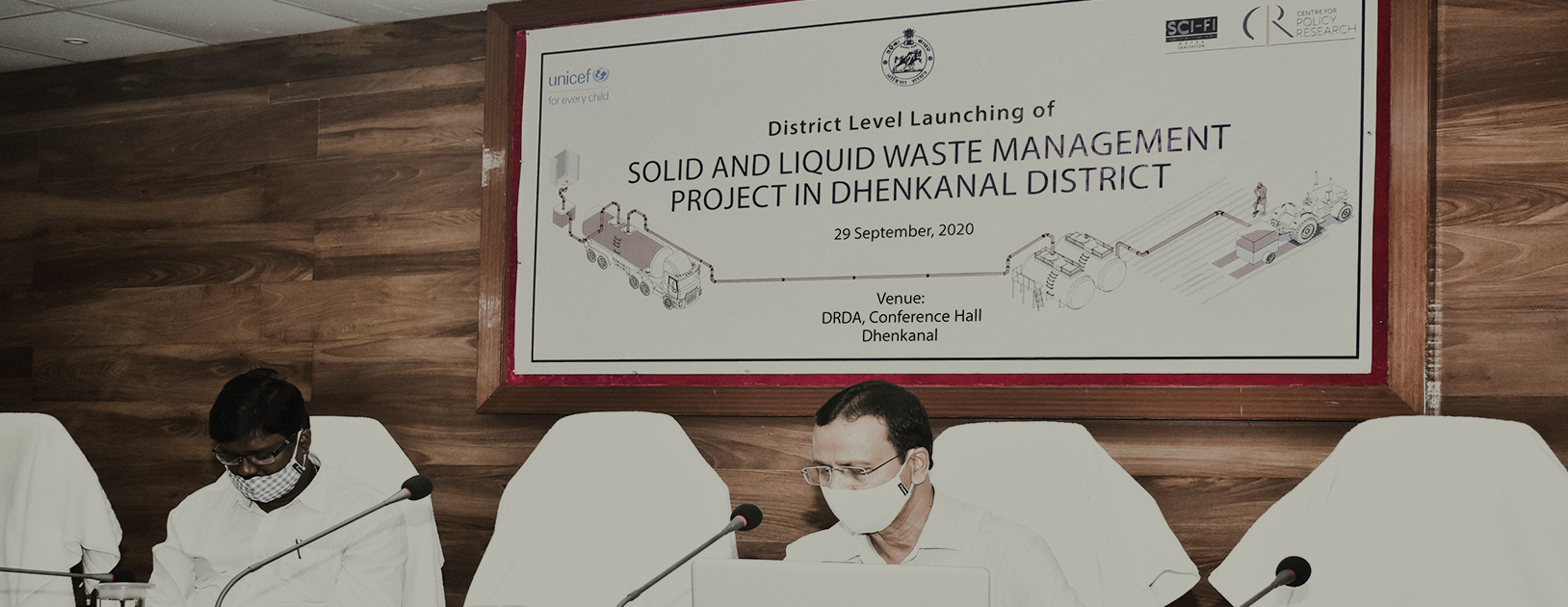
UNICEF & SCI-FI initiative stride towards district wide approach for SLWM with Government of Odisha

READ THE FULL BLOG
SANITATION

As the country heads into the second phase of the Swachh Bharat Mission (SBM 2), the district of Dhenkanal in Odisha is piloting an innovative approach to ensuring district-wide achievement of Solid and Liquid Waste Management. Access to a toilet facility has increased manifold under the aegis of the Swachha Bharat Mission putting India on the global map of sanitation leaders among developing countries. Recognizing that the outcomes of improved sanitation cannot be sustained without the safe management of faecal waste beyond the toilet, SBM 2 emphasis ODF sustainability, Faecal Sludge Management, Solid Waste Management and Greywater Management. The state of Odisha has already emerged as a pioneer in urban FSM, and with the recent issue of its state-level Rural Sanitation Policy, 2020, the state is set to lead the path for rural FSM and SLWM as well.

Building on this momentum and in line with the state- and national level imperatives, the Panchayati Raj and Drinking Water Department, Government of Odisha, in partnership with UNICEF and the Centre for Policy Research under its initiative, Scaling City Institutions for India: Water and Sanitation (SCI-FI), is undertaking a Pilot Project on ‘Solid and Liquid Waste Management (SLWM) in Rural Areas of Dhenkanal District’.

The Project will demonstrate two approaches to FSM and SLWM service delivery for rural areas in the district that hold lessons for the state- and nation-wide scale-up of FSM and SLWM services. The first will systematize urban-rural convergence for Faecal Sludge Management by formally ‘plugging in’ Gram Panchayats (GPs) located within 10 km radius from the Dhenkanal Urban Local Body to the urban Faecal Sludge Treatment Plant (FSTP). The second, focusing on rural areas outside of the plugging-in boundary, will create clusters of GPs for SLWM planning and service delivery, as well as, demonstrate a Greenfield SLWM system in one of the identified clusters. Furthermore, the Project will develop a novel District Sanitation Plan, covering all aspects for successful SLWM interventions, including IEC, Capacity Building, Technology Selection, among others.

The District Administration of Dhenkanal in collaboration with the UNICEF and the SCI-FI team, formally launched the initiative on urban-rural convergence for FSM on September 29, 2020, via videoconferencing. Kicking off the proceedings, Project Director, District Rural Development Agency (DRDA), Dhenkanal, stated, “Dhenkanal Municipality has become a model for pioneering faecal sludge and septage management in the country. Our priority is to extend these urban facilities to the rural areas to improve the quality of life of the rural populace.”

Ms Monika O. Nielsen, Chief of Field Office, UNICEF Odisha remarked, “UNICEF is delighted to demonstrate the operationalization of the Policy through the Pilot Project on Solid and Liquid Waste Management in Rural Areas of Dhenkanal District with the Centre for Policy Research”.

Praising the Project’s two-pronged approach to enabling district-wide as highly unique, comprehensive and relevant for state and nation-wide efforts on SLWM in rural areas, Mr Sujoy Majumdar, WASH Specialist, UNICEF said, “We are certain that the Project will not only enable Dhenkanal to emerge as one of the first districts in India to have ‘safely managed sanitation’, but also show the path for many more districts and states”.

Shubhagato Dasgupta, Senior Fellow and SCI-FI’s Project Director, said, “I am happy that today’s workshop will pave the way for the success of urban-rural convergence on SLWM under the committed leadership of District Collector, Dhenkanal, with the active participation of other stakeholders in the district including the Urban Local Bodies and Panchayati Raj Institutions”.

The District Administration expressed whole-hearted support to the Pilot Project with the Collector and District Magistrate, Dhenkanal District, informing that processes are currently underway for signing an agreement with the Dhenkanal Municipality to formalize the urban-rural FSM convergence for service delivery in rural areas.

The Launch concluded with the Additional Project Director, DRDA, Dhenkanal affirming that the Project will immensely benefit the district’s rural population and thanking all the Project Partners.

For further information and to schedule interviews with the concerned stakeholders, please write to sci-fi@cprindia.org or shubhagato@cprindia.org or hrudananda@cprindia.org or pooja@cprindia.org

Union Budget 2017

CURATED ANALYSIS BY CPR FACULTY
BUDGET ECONOMY

As Budget 2017 was announced by the Union government on 1 February, find below a curated analysis by CPR faculty.

Pratap Bhanu Mehta writes in The Indian Express that through this budget the government is trying to steady the ship after the demonetisation shock, explaining how it ‘is an exercise in forward-looking but cautious prudence’.

In an article in Hindustan Times, Rajiv Kumar writes that the budget is what the ‘doctor ordered for the economy’, as it addresses the critical tasks of ‘generating employment, promoting private investment, pushing up consumption, improving delivery of subsidies and public services’. He further writes in The Hindu on how the budget fulfills the three principle goals of reviving domestic investment; generating employment opportunities; and cleansing the economy of black money flows.

Yamini Aiyar writes in Livemint and in a Hindi article in Amar Ujala that the budget has maintained the status quo, as far as social sector schemes are concerned, and has been ‘remarkably silent’ on restructuring the ‘financing architecture for social policy post the 14th Finance Commission’. Avani Kapur reiterates this in another article in Deccan Herald, writing that despite riding high on expectations, Budget 2017 did not offer any major changes in majority of social sector schemes.

Kiran Bhatty writes in The Wire that the ‘attention deficit’ towards education remains unchanged in this year’s budget.

Sanjaya Baru and Rajiv Kumar also debate the budget on CNN News18 and Times Now (above) respectively.

Understanding homelessness in Delhi through the voice of the homeless

WORKING PAPER FROM CPR’S NEW PROJECT UNDERSTANDING METROPOLITAN HOMELESSNESS BY ASHWIN PARULKAR
URBAN ECONOMY RIGHTS

This working paper from CPR’s and TISS’s (Tata Institute of Social Sciences) Understanding Metropolitan Homelessness project tells stories of six migrant homeless men from Uttar Pradesh and Nagaland who live, for various durations, in shelters along the western bank of the Yamuna river in North Delhi, locally referred to as ‘Yamuna Pushta’. Through tracing their journeys from villages and towns to Delhi’s streets, the paper explores how these men became homeless and how they survive homelessness in Delhi.

This project, which is funded by ICSSR (Indian Council of Social Science Research) and is being conducted by CPR and TISS, is led by Partha Mukhopadhyay and Ashwin Parulkar at CPR, and Tarique Mohammed at TISS. A key objective of the project in general, and this paper in particular, is to better understand the structural causes of homelessness (e.g. poverty, unemployment) and how these are interlinked – through capturing the lived experiences of the homeless in their voice. This research aims to inform successful policy and implementation responses to address the current ineffectiveness of outreach efforts to homeless people in Delhi, despite interventions by the Supreme Court and support schemes designed by the government.

The six stories in the paper uncover conditions, and combinations, of extreme poverty and physical abuse experienced by these men in their native places before they left home. It traces how they secure jobs, and survive, in daily wage, informal economies without housing, as well as access social services like shelter, health and drug de-addiction programs to endure the streets of Delhi.

According to a 2010 United Nations Development Programme (UNDP) survey, 87% of nearly 55,955 homeless adults worked jobs in the informal economy, entailing ‘the most rigorous activities which are essential for movement and building in the city.’ This paper describes in detail the varied experiences these six men have in such jobs that they find through contractors in informal labour ‘markets’ (mandis); as cooks and servers in small eateries (dhabas), and as wedding catering party workers.

Through their trajectories, Parulkar also explores differences between working homeless men who return home to support families and those who have no ties with their native places and live on the streets indefinitely. For a sense of how these men became homeless and the work conditions they experience while homeless, listen to audio samples of interviews (above) conducted during field research.

The full working paper can be accessed here.

Understanding Informal Models of Septic Tank Emptying Services: Case Studies from Four Cities in India

FULL VIDEO OF CORP SEMINAR


Watch the full video (above) of the recent CORP seminar discussing the private septic tank emptying sector in India through case studies, in-depth ethnographic work and projections of business models.

Tarun Sharma discusses the market for private septic tank emptying services in the three cities of Dehradun, Jaipur and Bhubaneshwar, while Marie-Helene Zerah and Sweta Xess discuss the findings of a deep-dive ethnographic study of these operators in the peri-urban settlement of Aya Nagar (near the Delhi-Gurgaon boder). Finally, Anindita Mukherjee and Prashant Arya present the results of a projection exercise showing the progressive impact that regularisation and formalisation would have on the operations of these enterprises.

The presentation and the subsequent discussion dwelt on the need, and potential consequences of, regularising an informal sector with broad public health implications, the role of manual scavenging in such enterprises and the hidden costs of labor, and the need to understand the fundamental role that caste and community identities play in this particular kind of work.

Marie – Hélène Zérah is a Research Fellow at CESSMA (Centre d’études en sciences sociales sur les mondes africains, américains et asiatiques) / IRD (Institute of Research for Sustainable Development) deputed to the Centre for Policy Research.

Sweta Celine Xess is a Research Associate with the Centre for Policy Research.

Tarun Sharma is Director and Co-founder of Nagrika, a social enterprise focused on the issues of small and mid-sized cities.

Anindita Mukherjee is a Senior Researcher at the Centre for Policy Research working in the project, Scaling City Institutions for India (SCI-FI): Sanitation.

Prashant Arya is a Research Assistant with the Centre for Policy Research.

The question and answer session that followed the seminar can be accessed here.

Understanding Land Acquisition Disputes in India

CPR-LAND RIGHTS INITIATIVE REVIEWS SUPREME COURT CASES ON LAND ACQUISITION FROM 1950 TO 2016
RIGHTS LAND ACQUISITION

Context:

India faces serious challenges in creating development processes that generate economic growth while being socially inclusive, ecologically sustainable, politically feasible, and in accordance with the Rule of Law. Equitable and efficient acquisition of land by the state for economic development projects, including infrastructure and industry, lies at the heart of these challenges.

Simultaneously, securing constitutionally guaranteed land rights to the poorest and most vulnerable communities in India against the state and other dominant communities, has been considered crucial to their economic and social empowerment. Land is not only an important economic resource and source of livelihoods, it is also central to community identity, history and culture. Unsurprisingly then, throughout India, dispute over state acquisition of land that deprives people of their land rights spans various dimensions of economic, social, and political life.

How do we mitigate this conflict?

The CPR Land Rights Initiative report on ‘Land Acquisition in India: A Review of Supreme Court cases from 1950-2016’, offers some preliminary answers to this question. Not only is this report the first comprehensive country-wide study of land acquisition disputes since India’s independence, but also for the first time ever analyses these disputes along various metrics, such as i) public purpose, ii) procedure for acquisition, iii) compensation, iv) invocation of the urgency clause, v) pendency of claims, and vi) tracks trends with respect to distribution of disputes across geography and time, and central and state laws. The Report also analyses litigation under the newly enacted Right to Fair Compensation and Transparency in Land Acquisition, Rehabilitation and Resettlement Act, 2013 (LARR Act) for the three year period, 2014 to 2016.

Key findings:

Reasons for inequity between state and land losers: The Report concludes that the political and social contestation over land acquisition stems from the inherently coercive nature of the land acquisition process, which creates a severe imbalance of power between the state and land losers. While much of this imbalance was created by the text of the Land Acquisition Act, 1894, a considerable part of it could also be attributed to executive non-compliance with the rule of law. The result is a situation of great inequity for the land losers.
Legal reform under the LARR Act should be implemented by government, not subverted to redress these inequities: The Report finds that specific provisions of the LARR Act are steps in the right direction to redress the imbalance of power that was built into the Land Acquisition Act, 1894 in so far as: i) they empower livelihood losers along with title-holders to bring claims for compensation and rehabilitation, ii) bring compensation requirements in accordance with existing reality, and iii) introduce requirements of consent and social impact assessment. The Report shows that litigation helps channelise political contestation of state action into legal as opposed to extra legal disputes. Therefore, by empowering hitherto disempowered land losers to bring claims under the LARR Act, the Act will help preempt extra-legal conflict. Since conflict inevitably stalls or derails legitimate development projects, it is in the interest of the government to comply with, and not subvert the LARR Act.
Legal reforms must be supplemented by administrative and bureaucratic reforms: The Report highlights that legal reform is a necessary but not a sufficient precondition for ensuring greater equity and efficiency within the land acquisition process. In the absence of administrative and bureaucratic reforms, the introduction of the LARR Act will not succeed in eliminating inequities and inefficiencies embedded within the implementation of existing land acquisition procedures. In fact, the increase in procedural requirements under the LARR Act implies an even greater need for securing executive compliance with the rule of law, in order to translate the equities intended by these additional procedures into reality for land losers.
Types of administrative reforms required: Such administrative reforms include building of state capacity to meaningfully comply with the increased procedural requirements stipulated by the LARR Act, and designing institutional structures that incentivise such compliance with the rule of law. This, in turn, requires a serious mind-set shift within the government toward accepting the reform enshrined in the LARR Act, and not subverting it as we have seen in both the LARR Ordinance, and the state amendments to the LARR Act, as also the rules adopted to implement the LARR Act in the states.
Watch (above) a detailed presentation of the findings from the report.

Understanding Land Conflict in India and Suggestions for Reform

AS PART OF ‘POLICY CHALLENGES – 2019-2024: THE BIG POLICY QUESTIONS FOR THE NEW GOVERNMENT AND POSSIBLE PATHWAYS’
CPR LAND ACQUISITION

By Namita Wahi

An estimated 7.7 million people in India are affected by conflict over 2.5 million hectares of land, threatening investments worth $ 200 billion.1 Land disputes clog all levels of courts in India, and account for the largest set of cases in terms of both absolute numbers and judicial pendency. About 25% of all cases decided by the Supreme Court involve land disputes, of which 30% concern disputes relating to land acquisition.2 Again, 66% of all civil cases in India are related to land/property disputes.3 The average pendency of a land acquisition dispute, from creation of the dispute to resolution by the Supreme Court, is 20 years. Since land is central to India’s developmental trajectory, finding a solution to land conflict is one of the foremost policy challenges for India.

Understanding Incidence and Pendency of Land Conflict in India

Legislative and administrative factors are responsible for the high incidence of legal and extralegal conflicts over land, and judicial factors are behind the pendency of land disputes. Competing historical and current policy narratives of property rights over land, have resulted in the coexistence of numerous, conflicting laws leading to legal disputes over land. This is the legislative factor. This problem is compounded by administrative failure to comply with the rule of law. This is the administrative factor. The pendency of conflict, in turn, is a result of legal and evidentiary barriers in bringing land disputes to court, largely due to administrative and judicial incapacity; this prevents expeditious resolution of land disputes. This is the judicial factor.

Conflicting narratives, policies and land laws create land disputes

There are two conflicting narratives about ownership and management of land in India. The first narrative – inherited from the British colonial state5 – views common land, or land that is not privately owned, as merely a commodity, no different from labour and capital, with the state as the ultimate owner.6 This claim to ultimate ownership gives the state the power to redistribute land at will, as largesse to selected beneficiaries.7 Such state acquisition of land has historically been the source of considerable dispute. According to estimates by CPR’s Land Rights Initiative (LRI), these disputes constitute 30% of all land litigation in the Supreme Court over the past 70 years. LRI’s comprehensive study of land acquisition litigation before the Supreme Court over a 66-year period, from 1950 to 2016, reveals that all litigation is with respect to privately held land. In contrast, data from the Land Conflict Watch project reveals that the vast majority of current, on-ground, extralegal conflict over land is with respect to common lands.8 Thus, it is clear that in the face of state acquisition of land, when people have legally recognized land rights, they go to court. Where their rights are insufficiently recognized by law, they protest on the ground.

The second narrative – articulated by the ‘people’, including farmers, both landowners and tenants; and other traditional communities, such as cattle grazers, forest dwellers, tribals and fisherfolk – views land as an economic, social and cultural resource over which multiple groups exercise property rights. Usually, after intense on-ground contestation, the property rights of certain groups like Scheduled Tribes (STs)and tenants have been protected by the Constitution9 and statute,10 while in case of other groups like fisherfolk,11 their rights are protected by custom and, often, executive action.

As a consequence of these two historically competing policy narratives, the constitutional, legislative and administrative framework governing land is as fragmented as the land holdings in India.12 Enacted at different points of time, land laws clash with each other, because they seek to articulate in law these two competing narratives. For instance, the provisions of the Forest Rights Act, 2006, are in conflict with those of the Indian Forest Act, 1927, and the Forest Conservation Act, 1980, and are also threatened by proposed amendments to the Indian Forest Act.13 Legal conflicts also arise when laws are enacted or amended at different times to appease different stakeholders. For instance, the Right to Fair Compensation and Transparency in Land Acquisition, Rehabilitation and Resettlement (RFCTLARR) Act has, in the five years since it came into force, been amended by seven state legislatures.14 This will likely create more legal disputes with respect to land acquisition, because the original RFCTLARR Act provisions had been included with a view to addressing growing conflict over land acquisition.15 Moreover, in many states, we find laws that provide for eviction of unauthorized occupants over public lands coexisting with laws that provide for regularization of unauthorized occupation, thereby creating potential for dispute/conflict at the level of law itself.16

Finally, the legislative landscape is complicated by the fact that many subjects pertaining to ‘land’ are in the ‘state’ and ‘concurrent’ lists of the Constitution, leading to a multiplicity of original and active land laws.17 Yet, there is no official comprehensive database of all land laws in India. A first of its kind, ongoing LRI study estimates that India has over a thousand original and active central and state land laws.18

The problem of ‘multiple laws’ is exacerbated by the fact that these laws are administered by numerous government ministries at the central level, and departments at the state level. These include, for instance, the ministries of Law and Justice, Rural Development, Mining, Industries, Infrastructure, Urban Development, Tribal Affairs, Home Affairs and Defence.

Administrative non-compliance with law also creates and prolongs land disputes

Where laws are clear, disputes and conflicts arise because of administrative non-compliance with the rule of law due to both unwillingness and incapacity. The LRI study of all Supreme Court cases on land acquisition during 1950-2016 shows that 95% of the disputes arose because of administrative non-compliance with the legal procedure for acquisition of land, including the process of computation of market value compensation for land acquired.19 Around 34% of the disputes involved irregularities in completion of the procedure for acquisition. Almost half of such cases concerned with procedural irregularities involved administrative unwillingness to comply with the rule of law. The remaining half of the cases involved administrative incapacity to comply with the rule of law, in part because of governmental failure to regularly update administrative manuals based on changes in the law. Moreover, the government was more likely to lose than win these land disputes before the Supreme Court.20

Additionally, since colonial times, land in India has been broadly administered by the revenue and forest departments. But there have also always existed disputes between both departments as to which land belongs to which department. This in turn creates and prolongs land disputes.

Finally, legal disputes over land are also created by evidentiary barriers for establishing rights over land in the absence of documentary proof21 because of outdated/no land surveys22 and inaccurate/outdated land records23 in most states. The Department of Land Resources has sought to resolve the problem of inaccurate land records through the ‘Digitisation of Land Records Modernisation Programme’. However, unless the government makes a serious attempt to update land records on the ground to reflect the property rights of all landowners, digitizing them would not eliminate the problem of inaccurate land records.

Judicial reasons cause pendency of land disputes

Once a land dispute goes to court, serious judicial incapacity leads to pendency of disputes. First, a major cause for pendency of all disputes is India’s low judge-to-people ratio.24 Land cases form more than half of all civil cases and constitute over a quarter of cases before the Supreme Court; they also have the longest pendency compared to other cases. Hence low judge-to-people ratio particularly prolongs resolution of land disputes. Second, the judiciary, particularly at its lowest levels, lacks the financial, technical and infrastuctural capacity necessary to resolve disputes quickly.25 Finally, poor enforcement of court decisions by the government, and limited judicial capacity to follow up on such enforcement, especially when such decisions go against the government, also lead to prolonging of land disputes.

Policy Recommendations for Reducing Incidence and Pendency of Land Disputes

Eliminate legal conflicts. No government has ever attempted an exercise to rationalize existing land laws. But this is the need of the hour. The Law Ministry and Law Commission are best positioned to conduct or commission such an exercise. This would involve, first, the creation of an exhaustive database of all land laws in India. Once such a database of laws is created, the Law Ministry and Law Commission must identify, and Parliament must repeal, laws that deny rights of certain groups of people, particularly women,26 and eliminate genuine conflicts between laws.

Improve administrative willingness and capacity to implement the rule of law: The government must take steps to ensure greater administrative capacity and willingness to implement the rule of law. In addition, we need greater coordination between government departments dealing with land, transparency of land administration, and better access to land data. This can be achieved by undertaking the following measures.

The Department of Land Resources, currently under the Ministry of Rural Development, is the nodal agency for coordination of land policy across states. But land is not merely a rural concern. As India becomes increasingly urbanized, the government needs to have a more comprehensive imagination of land requirements for rural and urban populations. The creation of a separate Ministry of Land to serve as the nodal agency for coordinating land policy across different types of land is critical.
There needs to be a coordinated effort between the Ministry of Law and Justice, Department of Land Records, Ministry of Environment and Forest, Ministry of Tribal Affairs, state boards of revenue, and state forest departments to resolve conflicting land laws and streamline land administration.
All government departments dealing with land, and particularly those involved in land acquisition, must update administrative manuals in accordance with changes in legislation and judicial precedent.
Through dedicated interdepartmental meetings and other coordination, government must resolve land boundary disputes between the revenue and forest departments.
The government must devote financial and technical resources to conduct land surveys and update paper records to reflect property rights of all the people, as opposed to digitization of existing records that are substantially inaccurate.
The government must ensure better skills training so that officials dealing with land have both the knowledge and the capacity to implement the rule of law. Institutional mechanisms should be designed to incentivize compliance with, not defiance of, the rule of law.
Given the low success rate of government appeals, the government must carefully evaluate the likelihood of success of an appeal before pursuing it. Government officials must be incentivized to not appeal cases that have little likelihood of success following such an evaluation. This would go a long way in reducing pendency of land disputes.
The government must wholly commit to transparent land administration and comply with its obligations under the Right to Information Act, 2005, to make digitally accessible all land laws, executive notifications, rules, circulars, etc. pertaining to land administration. In addition, the government must open up to public scrutiny departmental data on compliance with land laws.
In addition to legislative and administrative reforms, judicial reforms can go a long way towards reducing the pendency of land litigation in India. The first step in this direction would be the implementation of key recommendations of the Law Commission.27 These include:

Changing the base for determining sanctioned posts for judges from ‘Judge: Population Ratio’ to ‘Rate of Disposal Method
Filling up all existing vacancies
Increasing the retirement age of subordinate judges to 62; and those of High Court and Supreme Court judges to 65 and 68 years respectively.
Greater financial allocations to the lower and higher judiciary, to enable infrastructure, technical and skills upgradation
Some states like Bihar have created separate land tribunals for expeditious resolution of land revenue cases. This model should be studied, and if found effective, should be replicated in other states.

Conclusion

Land conflict in India, both legal and extralegal, has existed from colonial times because of the imposition by the British state of the notion that all land not privately held belongs to the ‘state’. This concept has been continuously resisted by the ‘people’ who were disempowered by the colonial state’s deprivation of their legal property rights under precolonial administration. Over time, competing ‘state’ and ‘people’ narratives over land have led to conflicting policy and legal interventions. This has, in turn, led to legal disputes over land. Even when laws are clear, administrative failure to comply with the rule of law, due to unwillingness and incapacity, contributes to the incidence and pendency of land disputes. Serious judicial incapacity in turn prolongs pendency of land disputes.

Due to the increasing population pressure on land, and the corresponding demand for land to fuel the development engine, the scale and scope of land conflict today has assumed gigantic proportions, stalling development projects and threatening livelihoods and investments. Equitable and efficient intergenerational management of land is necessary not just for India’s economic development, but also for its political and social stability. Therefore, working towards resolving land conflict, in light of the above policy recommendations, is an imperative agenda for the new government.

Other pieces as part of CPR’s policy document, ‘Policy Challenges – 2019-2024’ can be accessed below:

The Future is Federal: Why Indian Foreign Policy Needs to Leverage its Border States by Nimmi Kurian
Rethinking India’s Approach to International and Domestic Climate Policy by Navroz K Dubash and Lavanya Rajamani
India’s Foreign Policy in an Uncertain World by Shyam Saran
Need for a Comprehensive National Security Strategy by Shyam Saran
A Clarion Call for Just Jobs: Addressing the Nation’s Employment Crisis by Sabina Dewan
Time for Disruptive Foreign and National Security Policies by Bharat Karnad
Multiply Urban ‘Growth Engines’, Encourage Migration to Reboot Economy by Mukta Naik
Schooling is not Learning by Yamini Aiyar
Clearing Our Air of Pollution: A Road Map for the Next Five Years by Santosh Harish, Shibani Ghosh and Navroz K Dubash
Protecting Water while Providing Water to All: Need for Enabling Legislations by Philippe Cullet
Interstate River Water Governance: Shift focus from conflict resolution to enabling cooperation by Srinivas Chokkakula
Managing India-China Relations in a Changing Neighbourhood by Zorawar Daulet Singh
Beyond Poles and Wires: How to Keep the Electrons Flowing? by Ashwini K Swain and Navroz K Dubash
Regulatory Reforms to Address Environmental Non-Compliance by Manju Menon and Kanchi Kohli
The Numbers Game: Suggestions for Improving School Education Data by Kiran Bhatty
Safe and Dignified Sanitation Work: India’s Foremost Sanitation Challenge by Arkaja Singh and Shubhagato Dasgupta
Safeguarding the Fragile Ecology of the Himalayas by Shyam Saran
Female Labour Force Participation: Asking Better Questions by Neelanjan Sircar
Towards ‘Cooperative’ Social Policy Financing in India by Avani Kapur
1 Land Conflict Watch, https://www.landconflictwatch.org/.
2 This is based on preliminary findings from a CPR Land Rights Initiative study, and is also consistent with findings from a comprehensive quantitative study of the Supreme Court’s caseload between 1993 and 2011. See Nick Robinson, ‘A Quantitative Analysis of the Indian Supreme Court’s Workload’, Journal of Empirical Legal Studies,10(3) (2003): 570-601.
3 Daksh, ‘Access to Justice Survey, 2016’, http://dakshindia.org/wp-content/uploads/2016/05/Daksh-access-to-justice….
4 Namita Wahi et al., ‘Land Acquisition in India: A Review of Supreme Court Cases from 1950 to 2016’ (New Delhi: CPR, 2017).
5 Articles 294 and 295 of the Indian Constitution stipulate that the Indian state succeeds to all property, claims and assets of the British state.
6 B.H. Baden Powell, The Land Systems of British India (Oxford University Press: 1892); B.H. Baden Powell, A Manual of Jurisprudence for Forest Officers Being a Treatise on Forest Laws (Calcutta, 1882).
7 An LRI study estimates that there are 102 laws of land acquisition alone, including state amendments to the Land Acquisition Act, 1894. Supra note 4.
8 ‘Land Conflicts in India: An Interim Analysis’, https://rightsandresources.org/en/publication/land-conflicts-india-inter….
9 Article 244(1) and Article 244(2), read with the Fifth and Sixth Schedules respectively, create special protections for land rights of Scheduled Tribes in geographically demarcated areas, known as Scheduled Areas.
10 Starting with the Bengal Tenancy Act, 1885, almost each agrarian state has laws protecting tenancy rights. Similarly, the Forest Rights Act, 2006, recognizes land rights of Scheduled Tribes and other forest dwelling communities.
11 A prolonged movement has sought the enactment of a Fishing Rights Act, along the lines of the Forest Rights Act.
12 86.21% of all land holdings in India are small and marginal holdings taken together (0.00-2.00 ha). See Census of India.
13 Nitin Sethi et al., ‘Modi government plans more draconian version of colonial-era Indian Forest Act’, The Wire, 21 March 2019, https://thewire.in/rights/modi-government-plans-more-draconian-version-o…
14 These include the states of Tamil Nadu, Gujarat, Rajasthan, Maharashtra, Telangana, Andhra Pradesh and Jharkhand. See Namita Wahi, ‘How central and state governments diluted the historic land legislation of 2013’, The Economic Times https://economictimes.indiatimes.com/news/politics-and-nation/how-centra….
15 Jairam Ramesh et al., Legislating for Justice: The Making of the 2013 Land Acquisition Law (New Delhi: Oxford University Press, 2015); Namita Wahi, ‘The Story of Jairam Rajya’ India Today, June 2015, https://www.indiatoday.in/magazine/books/story/20150622-jairam-ramesh-la….
16 Ongoing LRI study on ‘One Thousand Land Laws’.
17 Article 246 read with the Seventh Schedule of the Constitution of India.
18 CPR ‘Land Laws’ Database; see: https://www.cnbctv18.com/legal/hundreds-of-indian-land-laws-cause-confus….
19 Wahi et al., ‘Land Acquisition in India’.
20 Ibid. p. 28.
21 Sections 61-64 of the Indian Evidence Act, 1872, emphasize that documents must be proved by primary evidence, that is, presentation of the document itself. However, many people with legally recognized land rights do not have documentary proof for the same. This makes judicial resolution of land disputes extremely difficult.
22 Much of the northeastern part of India, including the state of Assam, has never been fully surveyed. The last full land survey for the state of Bihar happened in 1950s-1960s.
23 Former Minister for Rural Development notes that the state’s failure to fairly compensate those who lost land under the 1894 Act arose due to inaccurate land records, rampant undervaluation of sale deeds, and absence of land markets in many rural areas. See Ramesh et al., Legislating for Justice.
24 Two reports – the 245th Law Commission Report on ‘Arrears and Backlog: Creating Additional Judicial (Wo)man) power’ (2014), http://lawcommissionofindia.nic.in/reports/Report_No.245.pdf, and the 230th Law Commission Report on ‘Reforms in the Judiciary: Some Suggestions’, http://lawcommissionofindia.nic.in/reports/report230.pdf – highlight this as a major cause for disputes.
25 Ibid.
26 Bina Agarwal, ‘Gender and Legal Rights in Agricultural Land in India’, Economic and Political Weekly A39 30(12) (March 1995).
27 Supra note 24. (Q: Pl give direct source)
28 245th Law Commission Report, 29.