For India, Myanmar has always been an important piece of the geopolitical puzzle. As a country sharing a long land border of more than 1,600 km and an even longer history of imperial conquests, colonialism and anti-colonialism, Myanmar (or Burma) is intimately tied to India in more than one way.
The relationship, as it came into its own in the post-colonial period, quickly became rife with paradox. Despite their analogous pasts, they gradually moved away from each other through the second half of the last century. As Myanmar fell into the hands of a military dictator fourteen years after it gained independence from the British, its bilateral history with India became a palimpsest where shared memories of antiimperialist struggle, mass migration and mutual understanding came to be steadily replaced by a bitter tale of ethno-nationalism, xenophobia and distrust. But, the India-Myanmar affair has always had a way of finding its way through the dark. Aided by broader geopolitical shifts, India began to rewrite its Burma story with the end of the Cold War. Since then, New Delhi has methodically developed and practised a diplomatic approach that, in many ways, is a derivative of its broader geopolitical strategy of non-alignment. In a more regional context, it was driven by another key determinant of Indian foreign policy: keeping China at bay.
In our warming world, energy provision is not simply about technology but also politics (Hughes and Lipscy 2013). Energy systems are the result of intensely contested political battles in the domains of technology selection, ownership of capital, environmental externalities, access, and siting. The geographical reach, terms of access, and forms of ownership of electricity infrastructures reflect the prevailing distribution of political and economic power (Bridge, Özkaynak and Turhan 2018). Consequently, this gives rise to injustices such as uneven electricity access, displacement, and voicelessness among marginalized communities. Control over energy infrastructure is not just the result but often also the source of political and social power (Amin 2014; Larkin 2013) – that is, energy shapes politics just as much as politics shape energy.
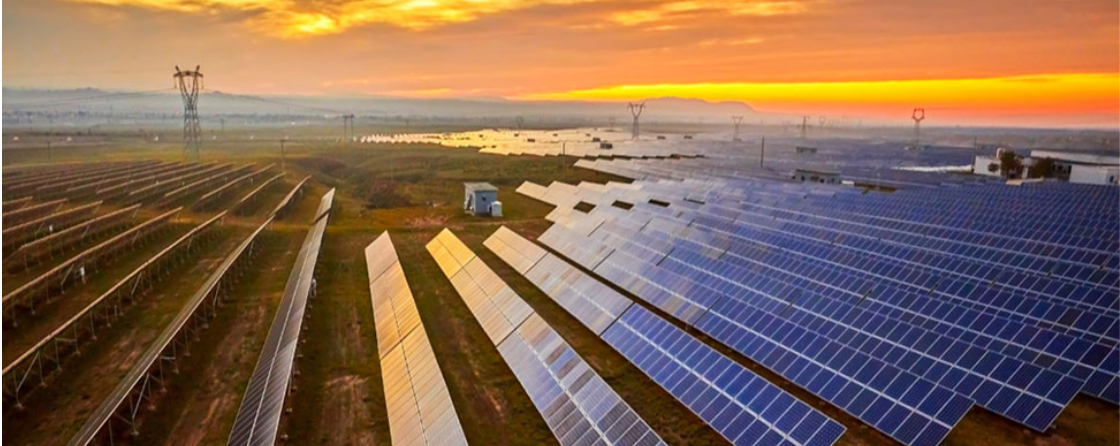
India is facing the twin imperatives of tackling historic energy poverty through an expansion of its energy system on the one hand and pursuing climate mitigation on the other. India’s electricity sector is dominated by coal-fired thermal power, which in turn drives the country’s carbon emissions. The energy sector as a whole contributed around 74 per cent of India’s total greenhouse gas (GHG) emissions in 2015, of which 38 per cent was from public electricity generation (GPI Secretariat 2016). On the other hand, India’s average monthly residential electricity consumption is only 90 kilowatt-hour (kWh), which is one-third of the global average and one-tenth of that of the US (Chunekar and Sreenivas 2019). Despite official estimates of 100 per cent electrification, many households still receive poor quality electricity for only a few hours each day (S. D’Souza 2019). The growing feasibility of renewable energy (RE) indicates a potential opportunity to address both climate mitigation and energy poverty challenges. India announced a target of 450 gigawatt (GW) of RE by 2030 as against a total installed capacity of 370 GW in April 2020 (PMO India 2019). As we progress towards a low-carbon system, what are the implications of this transition, given existing patterns of injustice and the prospects of their reproduction in our twenty-first-century energy infrastructure?
India’s electricity system can be characterized by its gigantic scale; the primary state ownership of its generation, transmission, and distribution infrastructure; cross-subsidization from commercial and industrial consumers to agricultural consumers; and its federal nature.
This essay reviews the policy changes which lowered the environmental standards to incentivize the recovery of the pandemic-hit Indian economy. It argues that to make the environmental response matter to the threat of pandemics, it is necessary to reorient environmental regulations to the objectives of public health and safety rather than to more economic growth. Having experienced the health and economic catastrophe of the pandemic at a global scale, it would be sensible to not overlook the potential of environmental regulation to protect public health, and to prevent making populations already exposed to the covid pandemic more vulnerable due to air pollution and other forms of environmental degradation. The essay concludes that if forest conservation, coastal and marine regulation, infrastructure expansions and land use changes are to be measured against these metrics, we could expect different forms of impact assessments and regulatory decisions.
This volume examines urban South Asia through the ideas of neighbourhood and neighbourliness. With a focus on the affective socio-spatial and sensorial experiences of non-metropolitan, small and intermediate cities, the chapters in the volume look at neighbourhoods as a key to exploring the textures of urban life. Bringing together scholars from a variety of disciplines including sociology, anthropology, urban studies, planning, and social history, the book highlights urban heterogeneity and contemporary transformations in South Asia. It discusses the linkages between urban lived spaces and social life; memory, migration, and exile; and the city and its society through practices of everyday life in neighbourhoods. With studies from Sri Lanka, Nepal, Afghanistan, Bangladesh, and India, the volume addresses a wide range of issues pertaining to urban experiences in their regional specificities and in a broader context of the Global South.
This book will be useful to scholars and researchers of urban sociology, anthropology, urban studies, planning and development, social history, political studies, cultural studies, geography, and South Asian studies. It will also interest practitioners and policymakers, architects, planners, civil society organisations, and thinktanks.
One of the most visible facets of urbanization in India is that it cannot be associated always with a rising standard of living or equal opportunity in terms of the generation of economic and social capital. While there are substantial ambitions of upward mobility among the rural people when they move to cities, their urban destinations remain more unequal than their village homes, and this inequality has been continuously rising since the early 1990s. There is also an increasingly large aspirational push in rural spaces to acquire urban characteristics, which is evident in the gradual convergence in consumption behavior, or increasing investment in education, especially in places such as census towns which are rapidly morphing from rural to urban. However, this drive toward being urban leads to a more complex set of social, political, and institutional processes of city building, which is often coupled with the fuzzy coalitions between the “business class” and the “political class” and is responsible for a divisive landscape marked by not only a visible inequality of income but also inequality in housing, security of land and tenure, basic infrastructure, and access to social safety nets.
While it is widely understood that urban inequality is multidimensional, the vectors of it are also diverse, ranging from social, economic, political, and more importantly, spatial. While dealing with public goods such as basic infrastructure, the question of spatial inequality, or “spaces where people live” becomes more important, primarily due to two reasons. The first is related to the continuously dynamic and haphazard nature of urban growth, which is an offshoot of a much “informalized planning regime,” where planning not only regulates but also “determines and limits” the spaces for urban inhabitance9 across social and economic lines. This often results in informalities in terms of inhabitation and production of city space, and the supply of basic services gets constrained due to the violation of planning regulations. It is worth noting that such spatial informalities are diverse and access to services varies by the different ways these spaces are settled, ranging from squatting on public land to building structures on land not earmarked for residential housing. The second factor that makes spatial inequality interesting relates to the wider question of citizenship and variation of micro-political orders in differentiated city spaces.
Delhi is India’s richest city, and as the capital of the nation, it has long enjoyed a favorable treatment from the center. As the home to the country’s national bureaucracies, it also benefits from a large base of secure, well-paid, government jobs. Over the last decade, the city has grown at an average real rate of 10 percent and has benefitted from a dramatic increase in large-scale infrastructure development. Yet, despite these advantages, Delhi is a deeply divided city marked by layers of social exclusion.
In the modern imaginary, the city represents the promise of freedom and opportunity. It marks a social space that is less constrained by traditional identities and one in which greater social interaction and density support economic dynamism. If development must, as Amartya Sen has so influentially argued, be based on strengthening basic capabilities, then the city can surely be a privileged site of capability enhancement. Indeed, the migrants who flood the city often come in search of better livelihoods, education, health, and basic services. But as any resident of Delhi knows, the quality of such services varies dramatically across neighborhoods, and the part of the city one lives in significantly impacts one’s ability to take full advantage of what the city has to offer. This chapter summarizes findings from the Cities of Delhi (CoD) (citiesofdelhi.cprindia.org) project based on fieldwork from the end of 2012 to the middle of 2015. We document the extent to which India’s capital is marked by different settlement types, defined by diverse degrees of formality, legality, and tenure, which taken together produce a highly differentiated pattern of access to basic services.
This chapter has three objectives. The first is to document as carefully as possible the quality and scope of access to basic services in the less privileged areas of the city. We focus on basic services such as electricity, water, sanitation, and solid-waste removal because these are clearly constitutive of core capabilities, relatively easy to measure (as compared to health or educational services), and well within the reach of a city such as Delhi under current levels of economic development, with a per capita gross state domestic product of more than USD 8,000 in purchasing power parity terms. Our second objective is to map the distribution of these services and, in particular, to understand how they are unevenly spread across different settlement types.
The challenge of ensuring clean water and safely managed sanitation towards meeting the Sustainable Development Goal 6 is made more complex by unplanned urbanisation in South Asia. Nearly 50% of all toilet-owning households globally and 83% in South Asia depend on non-networked sanitation, with a multi-step service chain comprising containment, collection, conveyance, and treatment of faecal waste. Over the last few years, South Asian governments have begun to eschew the long-enduring preference for centralised sewerage infrastructure in favour of better management of non-networked sanitation as part of city-level wastewater management systems. However, these interventions have largely excluded the household-level containment systems that hold the potential to create both adverse localised and diffuse public health and environmental outcomes if dysfunctional. The present Chapter discusses evidence from a multi-state household survey in India to assess the nature and quality of containment systems in use by urban Indian households. Secondly, it reviews approaches to their governance under more evolved paradigms to inform an ecosystem-wide strategy for managing these systems in India and countries with similar contexts.
This chapter is based on a first-of-its-kind study of tax incentives for philanthropy in India based on a review of tax incentives structures and available evidence on the impact on charitable donations across eleven other countries around the world. The chapter makes policy recommendations towards strengthening India’s tax incentives regime for philanthropy.
The research project was conceptualized and managed by Priyadarshini as a Senior Visiting Fellow at the Center for Social Impact and Philanthropy, Ashoka University, in partnership with the Center for Budget and Governance Accountability.
This chapter addresses the question of how Asia perceives judicial independence in Latin America. A general definition of judicial independence is that courts can act in ways that are not dictated by the political and administrative organs of the state or by powerful non-governmental actors. Such independence can refer to the institutional autonomy of judges from other individuals and institutions. However, it is not enough for courts to possess structurally (constitutionally) assigned powers such as judicial review, and be insulated in its governance (appointments, promotion, transfers, and budget). Judicial independence also refers to behavioural autonomy of the judges. One has to separate the scope of judicial choices from questions about the direction of such choices.
The chapter explored the critical question: ‘Are Dalits moving away from a tradition-sanctioned life of stigma, discrimination, and violence? Or, in other words, are they moving from caste to class?’ It attempted to figure out what are the caste and class dynamics cutting through Dalit political movements; to what extent could this casteto- class framework be relevant; why generalisations are not possible; how Dalits regard themselves; and how non-Dalits perceive the community.