



The surge in census towns (CTs) during Census 2011 has drawn a lot of attention to the ongoing and future dynamics of these in-situ urban settlements in India. Using the village level information from the previous and current censuses, the present study attempts to identify the villages that can be classified as a census town in 2021. While the prevailing dataset bears some obstacles for a neat identification of such settlements, it can be observed that a fairly high number of rural areas may be classified as CTs in future, which currently accommodates a population of 17.9 million. While the current nature of regional distribution of these areas may not vary much over the future, their areal characteristics over time portray multiple spatial processes undergirding India’s urban trajectory. A lot of these prospective CTs are also relatively prosperous than their current rural neighbourhoods, which reinforces the persistence of similar pattern of urban transformation in future.
Archives: Working Papers
The Election in Karnataka: Caste, Class, and Regional Complexity
Pranav Kuttaiah and Neelanjan Sircar discuss the complexities of the Karnataka election before vote counting tomorrow.
The working paper is also available in Kannada language and can be accessed here.
Demystifying the Indian smart city: An Empirical reading of the smart cities mission
The newly elected federal Government of India (GoI) launched the Smart Cities Mission (SCM) in 2015 with the stated purpose of improving the governance and infrastructural deficiencies that plague Indian cities. Missing, however, in the pageantry of the new programme is a cohesive understanding of a smart city. While the government documentation repeatedly implies infinite liberty for cities to self-define their understanding of ‘smartness’, the actions demonstrate that there is a larger idea of ‘smartness’ that the federal government seeks to implement. It is at this disjunction, between the rhetoric and practice of the Mission, that this paper finds its core research question – ‘What constitutes a smart city in India?’ Through a detailed reading of the government documentation of the top 99 cities, the paper argues that the there is a profound chasm between the professed objectives of the Mission and the strategies enacted to achieve these objectives.
Comments on the Proposed Amendments to the Electricity Act 2003
The proposed amendments to the Electricity Act 2003, released on 7th September 2018, are most critical among the set of planned reforms in the power sector. With significant changes, it seeks to provide an enabling framework for transformations in electricity market, pricing reforms, regulatory oversight, quality of supply and energy security. While we appreciate the endeavours and intent, in our comments we focus on some serious concerns the draft raises, vital gaps and issues that need serious consideration. These comments have been drafted based on an internal discussion at the Centre for Policy Research, and should not be considered an institutional position, as CPR does not take institutional positions on issues. Rather, these comments reflect the result of internal deliberations, aimed at understanding and reflecting on the draft amendments, with the aim of constructive feedback to the Ministry of Power.
Informality and State ‘Jugaad’: How urban governance works in India
How does the state govern cities where much of the economy is informal, on the margins of state regulatory institutions? In this paper, I draw on field research in Mumbai to a present an empirically-based conceptualization of the workings of the state in cities where’ informality is a pervasive feature of work and built environment.’ I draw on the popular notion of ‘jugaad,’- makeshift adaptations, workarounds and improvisation under constraints, to describe the state in Mumbai. ‘Jugaad’ practices and strategies of governance – adaptive, flexible, negotiated and contingent – are routinely applied by state actors at different levels in Mumbai, in spaces “illegible” to formal state institutions. ‘Jugaad’ governance practices are not arbitrary or merely corrupt, but rational, if ad hoc and extra-legal, adaptations around formal rules. These processes embed state actors in local power structures and crosscutting networks that span state, market and political organisations. While they enable the state to apprehend and partially incorporate the city’s informal spaces, they dissipate centralised state power and cohesiveness . The ‘jugaad’ state concept encapsulates how the formal and informal workings of the state interact and shape urban governance in largely informal cities. It draws attention to tensions and disjunctions within the state and in state-society relations in such contexts.
Infrastructure development in the Northeast: Hydropower, natural resources, legal and institutional frameworks and compliance
In 2000, the central government declared Northeast India as India’s hydropower hub. Over 165 large dam projects were proposed to come up in the region. These projects were held as crucial to India’s energy and environmental security as well as the economic development of the country’s marginalised northeastern borderlands.However, nearly two decades on, this proposal to regulate the region’s water resources remains unimplemented. In addition, the projects have generated a lot of public opposition in Arunachal Pradesh where most of these dams are supposed to be situated, and in the downstream Brahmaputra valley of Assam. This article will look into the government’s hype and failure to construct hydropower dams in the Northeast region. It points to the need for a reflexive political decision on water resource management from the BJP-led governments in Assam, Arunachal Pradesh and at the Centre.
Historical injustice and “Bogus” claims: Large infrastructure, conservation and forest rights in India
This essay examines the role of India’s 2006 Forest Rights Act in the procedures that regulate transfer of forest land to large infrastructure projects. Specifically, it shows the gap between the legally mandated requirements and how these are implemented in project approval processes. This is illustrated through a case study of the coal mining approvals in the Hasdeo Arand forest region in the central Indian state of Chhattisgarh. The essay also outlines the different actors who have influenced the discourses on forest rights of Adivasi and other forest dwelling communities and what they identify as factors that challenge the implementation of this law on the ground. It juxtaposes this analysis in the context of the recent decision of the Supreme Court of India on eviction of forest dwellers and examines whether that would bring in any structural change in the way the law is implemented.
School Consolidation in Rajasthan: Implementation and Short Term Effects
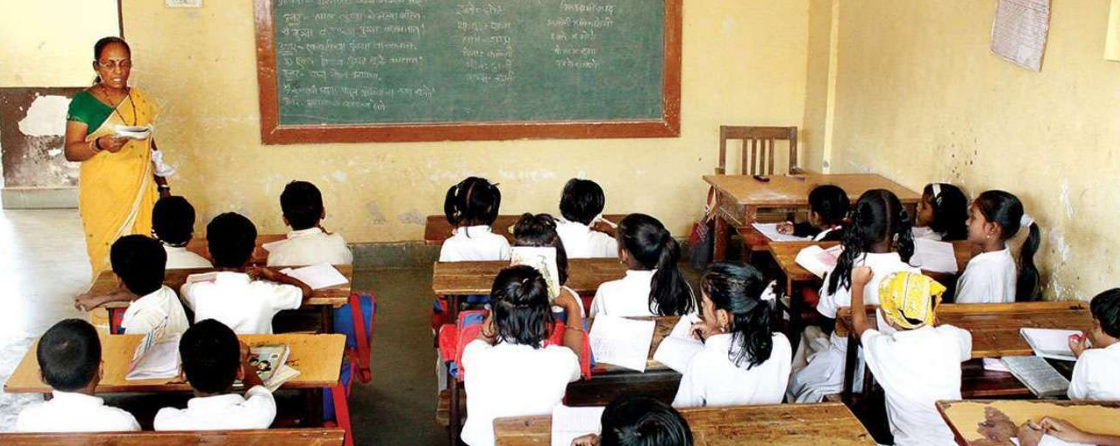
This paper attempts to add to the given literature by undertaking a detailed analysis of school consolidation process in Rajasthan. It seeks to answer the following questions:-
First, what are the specific criteria and conditions for closure of schools and their consolidation with other schools and whether they were adhered to by the state administration?
Second, whether school consolidation led to improvements in enrolment, availability of teachers, and essential school infrastructure facilities as mandated by the Right of Children to Free and Compulsory Education (RTE) Act, 2010.
New Powers: How India’s Smart Cities are Governing and Transitioning to Low-carbon Energy
Civilian Drones: Privacy Challenges and Potential Resolution
This paper, authored as part of the New America US-India Public Interest Technologies Fellowship 2019, examines the privacy implications of drones in civilian airspaces. Though a technology with significant benefits, drones can also carry out extensive snooping and surveillance. As India transitions to a regulatory ecosystem supportive of drone technology, it is imperative that the attention of policy makers be directed to the various privacy harms that lie in store.
Here, the different kinds of harms are mapped into two: traditional privacy challenges arising from a spatial invasion by drones into private spaces, and big data risks on account of the business models that the drone industry has paved the path for. Dealing with the first category of risks, the paper argues that serious criminal enforcement, along the lines of what some States in the United States have pursued, is imperative to safeguard the private domain from the prying eyes of third parties. It also points out serious gaps in Indian constitutional jurisprudence when it comes to structural interventions like drone surveillance, and recommends an overall assessment of the impact on privacy baseline from such technologies when the judiciary evaluates their legality against the touchstone of the fundamental right to privacy. On the second kind of risk, the paper argues for privacy dashboards that help citizens evaluate the purpose of drone operations and assess whether equipments retrofitted alongside the drone are truly required to fulfil these purposes or merely meant to gather unrestricted amount of personal and community data.