



Archives: Working Papers
Slipping Through the Cracks: The Demolition of a Government Homeless Shelter in an Informal Settlement: The Case of Amir Khusro Park
In May 2017, the Delhi Development Authority (DDA) demolished a Delhi Urban Shelter Improvement Board (DUSIB) shelter located in an informal settlement in South Delhi’s Amir Khusro Park. DUSIB had built the shelter in response to a 2014 Delhi High Court Order. DDA demolished the same structure in cognizance of a 2015 Delhi High Court Order, issued in response to a Public Interest Litigation (PIL) filed by a private citizen urging the state to remove illegal encroachments in the area.
The demolition of the shelter led to the eviction of various groups of people in Khusro Park: families in self-constructed ‘jhuggis’; women in the DUSIB shelter managed by a local NGO; and various people in a temporary shelter not authorized by government agencies. Field visits revealed connections between these settlements. Women and children of some jhuggi families, for instance, lived in the shelter where food, nutrition, documentation, education and health services were provided by the managing NGO for shelter residents and joint and nuclear jhuggi families. In this context, the report raises and responds to two salient questions. What makes homeless shelters in Delhi vulnerable to government sanctioned demolition and eviction? What is the implication of the particular case of Amir Khusro Park on the fate of shelters in Delhi’s other numerous informal geographies?
The authors examine events that preceded and unfolded during and after the demolition through ethnographic research in Khusro Park, interviews with government officials and NGO social workers, and legal analysis of both Supreme and High Court Orders and policies that assign powers to various federal, state and municipal land owning agencies. The report finds that Khusro Park residents’ Court-substantiated, though broadly defined, rights to live in shelters and urban informal settlements were violated by government agencies, such as DDA. Such government agencies are permitted to undermine general rights urban poor people have to city spaces and resettlement through the existence of specific provisions that categorize jhuggi and shelter residents on government land ‘encroachers’.
The authors conclude that due process measures of DUSIB’s current resettlement policy – land surveys, provision of notice and rehousing – should be based on a thorough understanding of (a) types and nature of settlements along the informal urban housing continuum (b) infrastructure and services used by residents and (c) the nature of contracts between (i) state and federal agencies and (ii) government agencies and NGOs that authorize land use and service provision.
What Matters for Urban Women’s Work?
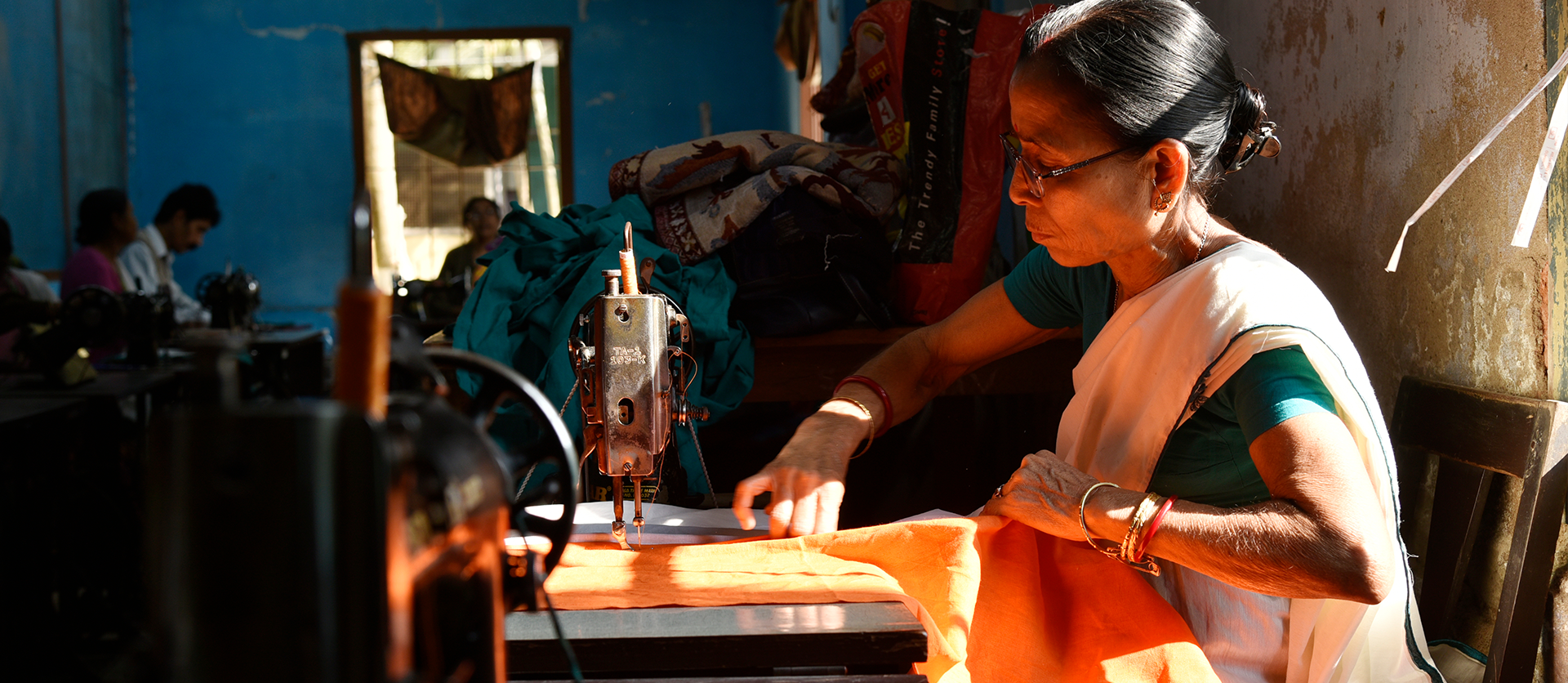
India is one of the lowest globally in terms of female labour force participation (FLFP), ranking only better than Pakistan in South Asia. While the decline in FLFP in rural areas is starkly visible, the urban FLFP has been consistently low since the 1980s despite higher economic growth and increasing level of education among females. The economic cost of such low FLFP (16.8%) is huge and if, for instance, it could be raised to the level of FLFP in China (61.5%), it has the potential to raise India’s GDP up to 27%. This paper attempts to investigate the structural deficiencies behind this consistently low urban FLFP through a variety of perspectives, ranging from measuring the complexity of women’s work to the implications of caste, location and family structure. It finds factors like presence of female-friendly industries, provision of regular salaried jobs and policies that cater to women’s needs to work near home like availability of part-time work, can improve the situation, though prejudices arising from patriarchy require to be addressed to make these measures truly transformative and not palliative.
The Centre for Policy Research gratefully acknowledges support from Oxfam India in the preparation of this working paper.
State of Urban Poor Rental Housing in India and Emerging Policy trends
“Housing for All”, an often-stated vision for housing policies in India, has come to mean ownership houses for all residents. This singular focus has been part of programs from the early 1970s and has failed to recognize the range of housing tenures that may enable a viable, sustainable market. This paper reviews the evolution of housing policies since independence and shows that the emphasis on rental housing has not been a central part of housing programs to date. It then broadly characterizes the rental housing market in India, based on national statistics, to show how rental housing for the urban poor, is half of the rental housing market and is the least understood. Thereafter based on primary survey findings, it identifies the main issues that may inform a comprehensive rental housing program was to be developed in India.
This paper was selected for presentation in the Annual World Bank Conference on Land and Poverty -2020 (Session 11-01: Addressing urban informality in an equitable way)
Can the Revenue Department Remain Urban Agnostic in India?
The spatial morphology of Indian cities mirrors a disconnect between the urban statutory spatial plans and Revenue records. The Revenue Department instituted during the colonial times had an overarching mandate to collect land taxes and, till today, is referred to as the “custodian of the land.” This was a key institution that prepared robust cadastre maps to support the revenue collection. Post-independence, these spatial records are not updated. The institutional disconnect between the Revenue and Registration departments and Urban Land Administration Institutions in the urban and peri-urban areas coupled with poor land records affect the overall confidence in the land administration system. This further limit the nurturing of a robust land market. Taking two land titling programmes: JAGA mission, Odisha, and LIFE mission, Kerala, this paper argues that to achieve the full potential of such land titling programmes, the role of the Revenue and Registration Departments need to be reimagined.
This paper was selected for presentation in the Annual World Bank Conference on Land and Poverty -2020 (Session 01-11: The challenge of improving urban land records)
Study of State Finances 2020-21 (Provisional)
The ‘Study of State Finances 2020-21’ Working Paper delves into the revenue and expenditure performance of 17 States. As the COVID-19 pandemic tightens its grip, this timely analysis offers a unique window into the fiscal space available with States prior to the lockdown. This information is critical at a time when they are expected to craft adequate social protection responses and restart their economies.
Comments on the Draft Electricity (Amendment) Bill, 2020
The draft Electricity (Amendment) Bill, 2020, released on April 17, 2020, is an improvement from its predecessors. It has dropped some significant proposals that were resisted and has added new provisions. Are these reform proposals adequate and appropriate to address India’s long-standing electricity challenges? Are these prescriptions based on a proper diagnosis of current trends and future challenges? How will these reforms proposals affect India’s ongoing transition to 21st century electricity? While we appreciate the endeavours and intent, in our comments we focus on some serious concerns the draft raises, vital gaps and issues that need serious consideration.
Comments on the Draft EIA Notification 2020
The Ministry of Environment, Forest and Climate Change has proposed a new notification to supersede the Environment Impact Assessment (EIA) Notification 2006 that is currently in force. The Ministry has sought comments from the public on this draft EIA Notification 2020. Shibani Ghosh, Fellow, CPR, in her comments to the Ministry has highlighted that there is a crying need to overhaul the EIA Notification 2006 and the regulatory framework built around it – not only to address its various inherent weaknesses that have been identified over the years, but also to put in place systems and processes that respond to the steadily degrading environmental quality in the country. However, the draft EIA Notification 2020 fails to do so. According to Ghosh, in its current form, the draft Notification is legally untenable as it does not conform to its parent Act – the Environment (Protection) Act 1986, and is in the teeth of various judgments of the Supreme Court, High Courts and the National Green Tribunal. It dilutes the already weak processes of environmental impact assessment, expert scrutiny and public consultation, and wrongly condones violations and illegalities. The comments are divided into two sections. Section I discusses four specific reasons why the draft notification is legally untenable and Section II highlights five major concerns that arise from the proposed regulatory design.
Quantifying heterogeneity in SARS-CoV-2 2 transmission during the lockdown in India
The novel SARS-CoV-2 virus shows marked heterogeneity in its transmission. Here, we used data collected from contact tracing during the lockdown in Punjab, a major state in India, to quantify this heterogeneity, and to examine implications for transmission dynamics. We found evidence of heterogeneity acting at multiple levels: in the number of potentially infectious contacts per index case, and in the per-contact risk of infection. Incorporating these findings in simple mathematical models of disease transmission reveals that these heterogeneities act in combination to strongly influence transmission dynamics. Standard approaches, such as representing heterogeneity through secondary case distributions, could be biased by neglecting these underlying interactions between heterogeneities. We discuss implications for policy, and for more efficient contact tracing in resource-constrained settings such as India. Our results highlight how contact tracing, an important public health measure, can also provide important insights into epidemic spread and control.
Hunger, COVID-19 and The Indian Administrative State
COVID-19 produced an acute and widespread crisis of hunger across India, which was felt most acutely by migrant workers and those who were outside the reach of India’s highly organised but rigid Public Distribution System (PDS). The hunger was incidental to the actual disease itself, but severe enough to be considered a crisis of governance on its own as it brought the Indian state face-t0-face with one of its oldest and most enduring challenges: how to ensure that essential supplies of food reach those in need of it?
Could the Indian government simply have ‘universalised’ the PDS, and made it accessible to all? It was pointed out that the Indian state had adequate buffer stocks of food grain to make this feasible. However, for reasons that were never articulated, this option was never seriously considered by the government of India. Instead, governments tried to extend the reach of the PDS delivery mechanism, and to devise ways to deliver relief outside of the PDS framework.
These strategies were however quite challenging for the risk-averse, (nominally) rule-bound Indian state that is disinclined to allow for discretion in spending of government funds, making purchases and allocation of largesse. Typically, the Indian state is all the more reluctant to delegate power to exercise discretion to lower levels of government. For this reason, the Indian state governments (who were at the frontline of this response) seemed to need to devise a framework of rules for the identification of beneficiaries, even in the middle of a humanitarian crisis.
As a related problem, the states also did not necessarily have the organisational wherewithal to take up rapid, decentralised and locally grounded interventions. The organisational wherewithal, so to speak, could come in various forms. Some examples of this, which we saw at play, were decentralised government, the capacity to make non-state collaborations and institutionalised systems for the ‘continuous updating’ of beneficiary lists. More fundamentally, however, what is needed is the capacity for high levels of government to be able to formulate responsive policy and to be able to trust in the ability of their subordinate ranks to carry out new interventions, often in case-specific and individualised ways.
Arkaja Singh’s working paper explores these issues in the context of state response to the COVID hunger crisis in the states of Delhi, Kerala, Bihar, Madhya Pradesh and Haryana,